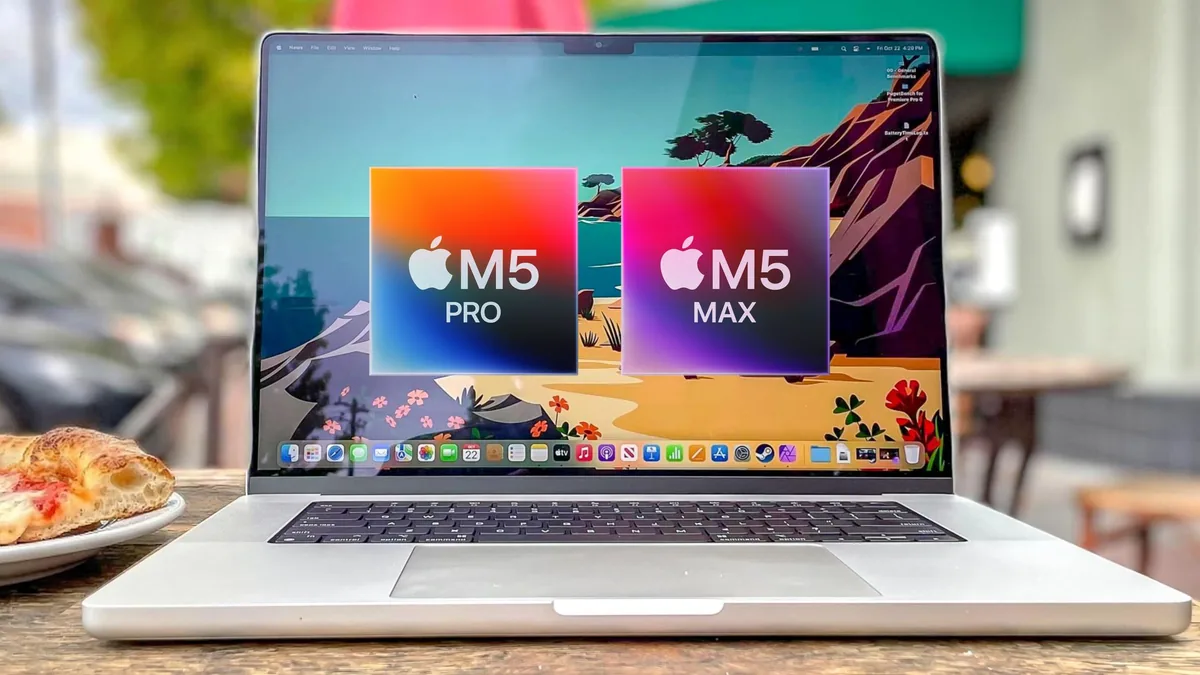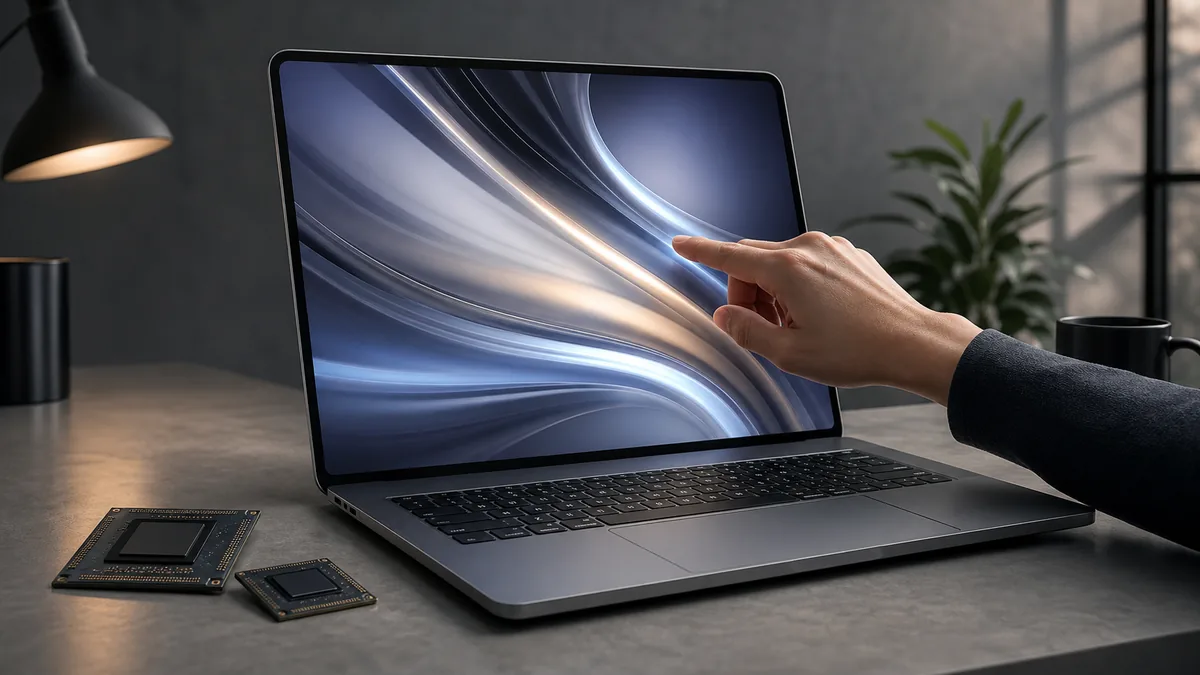
The touchscreen MacBook rumor has always sounded like a bigger shift than a normal chip update. Apple has resisted touch on the Mac for years, even as iPad and Mac workflows have moved closer together. A new Chinese report says the first touchscreen MacBook may use standard M5 Pro and M5 Max chips, which would make the display and interaction change more important than the processor story.
That approach would be very Apple. Instead of tying a new form factor to an experimental chip, the company could use known silicon and focus engineering effort on the display stack, hinge, software behavior, and durability. It also fits the broader Mac lineup pressure we covered in MacBook Ultra chip reporting, where Apple may be exploring new laptop positions without inventing a chip tier for every one.
财联社 reported the latest claim that Apple's first touchscreen MacBook could use existing M5 Pro and M5 Max class chips. The source page did not expose a dedicated leak image, so this article uses a generated editorial cover rather than pretending a source photo exists.
The real challenge is macOS. A touchscreen Mac cannot simply accept taps as a novelty. Buttons, menus, window controls, text selection, drawing, scrolling, and keyboard handoff all need to feel intentional. If Apple adds touch but keeps the interface unchanged, users may treat it as an expensive demo.
A standard chip choice could also help battery life and pricing. M5 Pro and M5 Max systems would let Apple reuse proven thermal envelopes and performance expectations. That lowers the risk compared with launching a new input model and a new silicon model at the same time.
The product still needs a reason to exist beside iPad Pro. Apple has spent years saying the Mac and iPad are different tools. A touchscreen MacBook would blur that line, so Apple must explain whether it is for creators, developers, students, accessibility, or a broader future where touch is simply another Mac input.
The leak is early, but the detail feels practical. If Apple finally moves touch onto the Mac, it may do so through a familiar chip foundation. The unfamiliar part will be how the company makes macOS comfortable under a finger.
A touchscreen MacBook would also force Apple to revisit hardware ergonomics. Laptop screens wobble when touched unless the hinge is tuned for it, and reaching across a keyboard can become tiring during long sessions. Apple will need to decide whether touch is for quick taps, drawing, accessibility, or full iPad-like interaction. Each answer leads to a different design.
The chip detail makes the rumor more grounded because it suggests Apple may reduce variables. If the processor, thermal profile, and performance tier are familiar, the company can spend more effort making the touch layer feel natural. That is how a controversial product change becomes easier to ship: keep the foundation stable while changing the part users directly notice.
The iPad comparison will not go away. A touchscreen MacBook could either strengthen the Mac by giving it another input mode or weaken the iPad's claim as Apple's touch-first productivity machine. Apple has to draw the line carefully. The best outcome is not one device replacing the other, but each becoming clearer about what it does best.