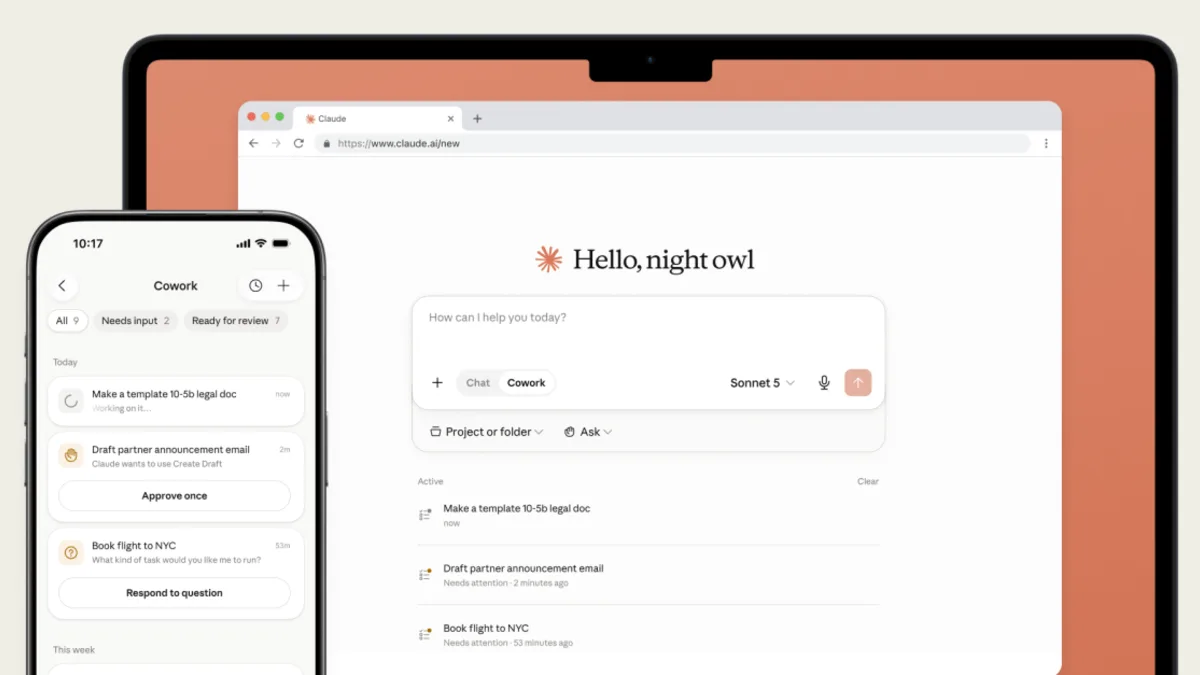
The Vercel models-versus-agents discussion captures a split that developers are already feeling. A model answers, drafts, predicts, or generates. An agent has to plan, call tools, remember context, recover from errors, and finish a task without turning a simple request into a fragile science project.
That distinction matters because companies keep buying AI tools under one broad label. A chatbot for support, a code assistant, and an automated deployment helper may all use language models, but they require very different reliability standards once they touch production systems.
It ties directly to our earlier article on AI agent spending controls. Agents are powerful partly because they do more work, but that also means more calls, more failure points, and more need for budget and permission boundaries.
TechCrunch highlighted the Vercel angle around how the AI market is separating models from agent products. The useful part is that a developer platform company sees the difference from the workflow side, not only from the research-lab side.
For model providers, the job is to make reasoning, coding, retrieval, and multimodal output stronger. For agent builders, the harder job is orchestration: state, credentials, approvals, retries, observability, and clean handoffs when a task should stop.
Developers will likely care less about who has the single best benchmark and more about which stack helps them ship. A slightly weaker model inside a better agent framework can beat a stronger model that is difficult to control in real projects.
The enterprise buyer has a different concern. If an agent can change files, deploy code, update a CRM, or send messages, then permissions and audit trails are not optional. The tool has to explain what it did and why, not just produce an answer.
There is room for confusion in the market. Vendors may call every workflow an agent because the word sells. Buyers should ask whether the product actually plans across steps, uses tools safely, and exposes logs that can be inspected after the fact.
The next signal to watch is pricing. If agent products become their own category, they may move away from simple per-token charges toward task, seat, workflow, or outcome-based models.
The developer experience will decide a lot here. If agents require complex setup, hidden prompts, brittle tool schemas, and unclear debugging, teams will retreat to simpler model calls. The successful platforms will make agent behavior inspectable, with logs that show decisions, tool calls, failures, and the exact point where a human needs to step in.
This split also changes how startups compete. A small company may not train a frontier model, but it can build a better agent around a narrow workflow such as deployment review, customer onboarding, financial close, or documentation cleanup. That creates room for application-layer winners even as the foundation-model market stays concentrated.
Framework choices will become stickier as a result. Once a team builds permissions, monitoring, and recovery around one agent stack, moving to another tool will be harder than swapping one model endpoint for another. That gives platforms like Vercel a chance to own workflow infrastructure even when the underlying models keep changing.
The split is healthy. AI tools become easier to evaluate when models and agents are treated as different layers. Vercel's comments matter because the developer market is where that distinction turns from vocabulary into purchasing criteria.