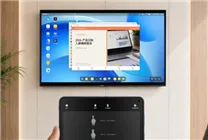
vivo is making a familiar foldable promise sound more serious: the phone should become a desk device when a larger screen is available. The X Fold6 is now being tied to a new computer mode that is described as more than simple screen casting. That distinction matters because foldables need productivity features that match their high prices.
Simple mirroring is useful for presentations, but it does not make a phone feel like a workstation. A true desktop mode needs windowed apps, pointer support, keyboard and mouse behavior, document handling, and a way to manage files without feeling trapped inside a stretched phone interface. vivo appears to be aiming at that second category.
The phone itself can reportedly work as a touchpad after connecting to a larger display. That is a clever use of the hardware because it keeps the foldable involved instead of reducing it to a hidden processor box. If the implementation is smooth, the X Fold6 could move between pocket, tablet, and desk modes with less friction.
Kuai Technology reported comments from vivo OS product director Bai Qi, saying the X Fold6 computer mode can open apps in window form on a large screen, handle spreadsheets, presentations, and documents, and use the phone as a trackpad while external mouse and keyboard input make the workflow more PC-like.
The silicon angle is also notable. The report says the X Fold6 launches with a Blue Crystal x Dimensity 9500 super-powered edition, jointly tuned by vivo and MediaTek for foldable screens and AI productivity. It claims the NPU peak performance improves by 111 percent while power drops by 56 percent, giving features like AI assistants and multi-window work more headroom.
This is exactly where foldables need to evolve, a theme also present in our coverage of wider pocket tablet designs. Larger inner screens are only half the story. The software must make the extra space useful, and desktop modes are one of the cleanest ways to prove that.
The feature could also change how buyers compare foldables against laptops. Nobody expects a phone to replace a full workstation, but many people only need email, documents, browser tabs, messaging, and presentation edits while traveling. If the X Fold6 can cover that light work cleanly with one cable and a hotel TV or monitor, vivo gains a stronger practical argument than another camera sample or benchmark score.
The challenge is app behavior. Android apps can still be inconsistent in resizable windows, and office workflows often expose awkward file pickers, keyboard shortcuts, and scaling problems. vivo can build a polished shell, but the experience will depend on how well key apps behave in a desktop environment.
If vivo gets the details right, the X Fold6 could make the productivity case stronger than another hinge or camera claim. A foldable that can become a lightweight workstation in a hotel room, classroom, or meeting space is easier to justify. The hardware has to be powerful, but the win is ergonomic: fewer devices, fewer cables, and less compromise when the phone leaves the pocket.