Google's DiffusionGemma is interesting because it challenges the way most people think text models have to work. Standard language models generate token after token, which is easy to understand but not always efficient. A diffusion-style text model can work more like an image diffusion model, creating and refining a block of output through iterative changes. That can make speed the headline, even if polish and reasoning quality are not yet equal to stronger traditional models.
The trade-off matters. AI users often ask for the most capable model, but many real products need fast-enough responses at lower cost. Drafting, autocomplete, lightweight coding help, search snippets, interface suggestions, and local assistants can benefit from speed even when they do not require frontier-level reasoning. If a model can produce usable text faster on local or server hardware, developers may accept lower peak quality for certain tasks.
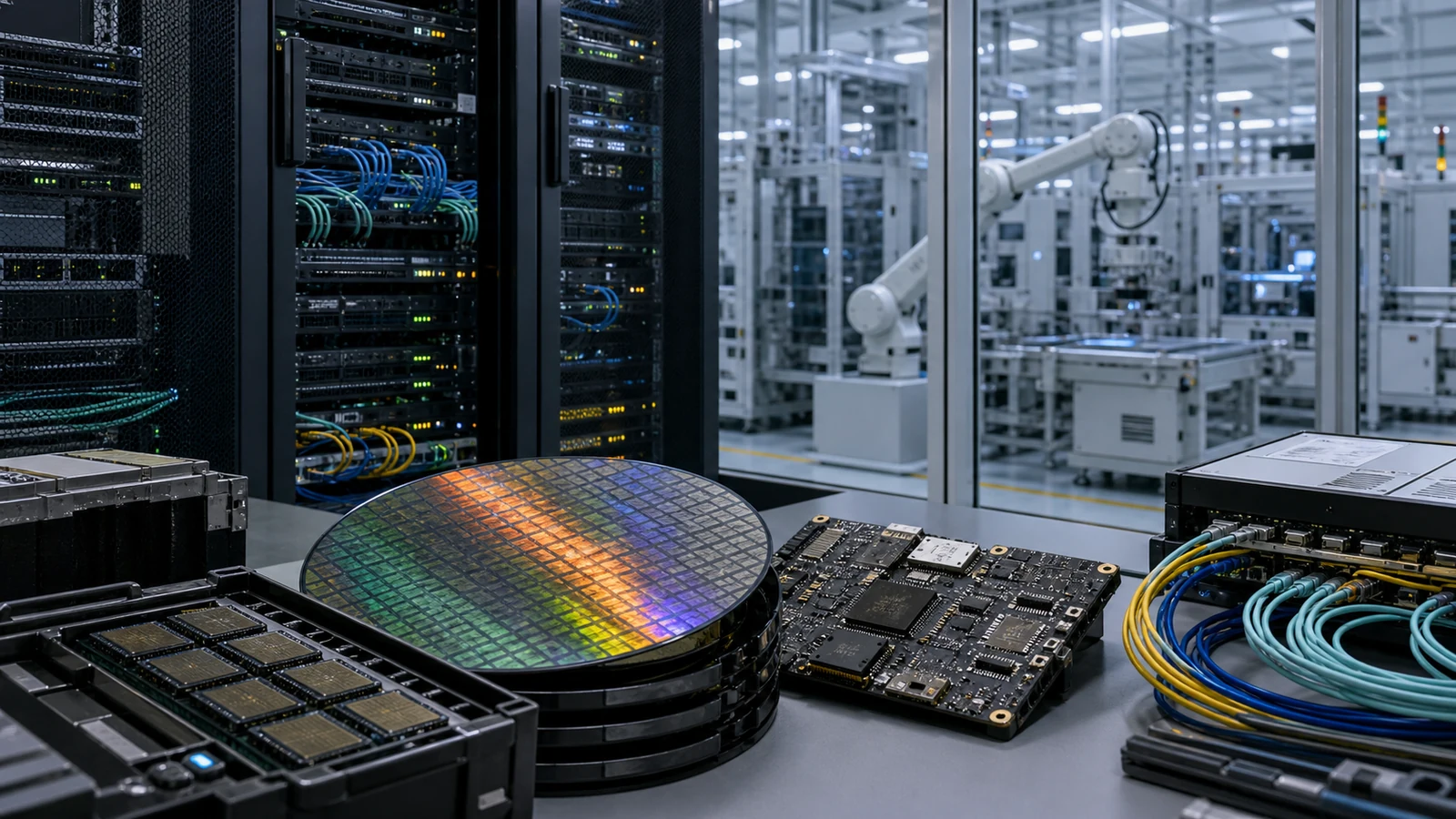
This is also a hardware story. AI infrastructure is constrained by cost, memory, power, and latency. A model that can generate more tokens per second on high-end GPUs or consumer hardware gives developers new deployment choices. It may not replace large reasoning systems, but it can sit underneath them as a fast drafting or interactive layer.
Decrypt reported that DiffusionGemma can produce text at very high token speeds, while still trailing stronger Gemma models in quality. That balance is the whole story. Google is not claiming that speed alone solves AI. It is showing another path for applications where responsiveness is part of the user experience.
The developer impact could be meaningful if the model becomes easy to test. Open models let teams experiment without waiting for closed API roadmaps. They can fine-tune, benchmark, compress, and place the model in unusual workflows. Even if DiffusionGemma remains experimental, it gives the AI community another architecture to evaluate at a time when transformer scaling is getting more expensive.
The practical question is where users will feel the difference. A fast but rough model is not enough for legal, medical, or financial reasoning. It may be very useful for drafts, interface hints, and quick transformations. That is why DiffusionGemma should be judged as a tool in the AI toolbox, not a direct replacement for every chatbot.
The model also points to a future where applications mix different AI systems in one workflow. A fast diffusion text model could draft, rephrase, classify, or create several options quickly, while a stronger reasoning model checks the final answer. Users may never see that handoff. They will only feel that the product responds quickly and still catches major mistakes before output is shown.
That layered approach could be important for local AI. Consumer devices do not always have enough memory or power for the largest models, but they can still run smaller systems that make the interface feel alive. If DiffusionGemma-style models help phones and PCs respond instantly for low-risk tasks, they could become part of the everyday AI experience even without being the most capable models on benchmarks.
Benchmarks will need to evolve too. Speed is easy to celebrate, but developers need task-specific tests that show when a fast model is good enough. A model that is weak at reasoning may still be excellent at drafts, summaries, and low-risk transformations.