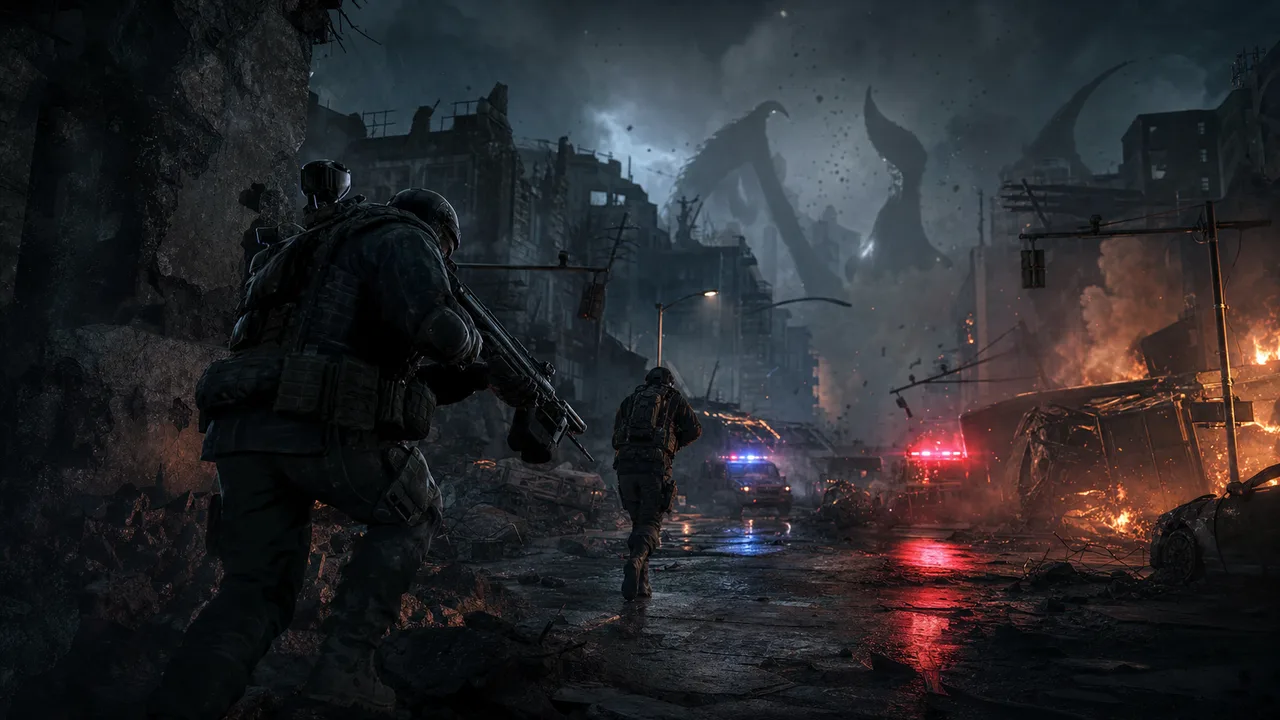
Gears of War: E-Day is doing something deliberately unfashionable for Microsoft: it is keeping one of Xboxs most recognizable franchises at home. The prequel now has an October 6, 2026 release date and is being positioned as an Xbox console exclusive with PC support, rather than another immediate PlayStation expansion. After months of debate around Microsofts multiplatform strategy, that decision gives E-Day a sharper identity. This is the game Xbox can point to when it wants to argue that its own console still has emotional weight.
The setting helps. E-Day goes back 14 years before the first Gears of War, following younger versions of Marcus Fenix and Dom Santiago as the Locust Horde breaks through into human civilization. That is a richer premise than another sequel escalating the same war. The original Gears worked because it felt like a ruined world already past the point of repair. A prequel can show the moment that confidence collapsed, making the horror less abstract and the familiar characters less mythic.
It also gives The Coalition a chance to make Gears feel mean again. Recent entries were technically accomplished, but the franchise is strongest when every street, wall, and door looks physically hostile. Emergence Day is tailor-made for that mood. The player should feel like they are not clearing arenas but surviving an urban disaster that gets worse every hour. That is a different emotional target from the slick action showcase that many big shooters chase.
TechRadar reported the October 6 date and the Xbox console exclusivity angle from the Xbox Games Showcase, while also noting the focus on Marcus, Dom, and the first Locust emergence. The timing is important: E-Day arrives before Grand Theft Auto VI takes over the holiday conversation, giving Xbox a window to own part of October before the market gets louder.
For PC players, the pressure will be technical rather than nostalgic. Gears has often been used to demonstrate Microsofts engine, art, and performance ambitions, and a dark prequel built on modern hardware will invite heavy scrutiny. The same PC audience that is watching optimization delays in action games will expect stable frame pacing, good ultrawide support, sensible shader compilation, and a configuration menu that respects mid-range machines. A violent set piece is not enough if the release feels rough on real systems.
The prequel structure also carries a narrative risk. Everyone knows the broad outcome. The Locust war begins, Sera burns, and Marcus becomes the hardened soldier players met in 2006. The writing has to create tension from experience, not surprise. Doms relationship with Marcus, the shock of civilians seeing the Locust for the first time, and the institutional failure of the Coalition governments can do that if the game lets quiet dread sit between firefights.
Gears of War: E-Day therefore feels like a corrective project. It is not chasing an open-world identity or trying to explain every piece of franchise lore. It is returning to the original wound and asking whether the series still has the physicality, pace, and ugly grandeur that made it distinct. If The Coalition delivers, E-Day could be the rare prequel that makes the first game feel larger rather than smaller.