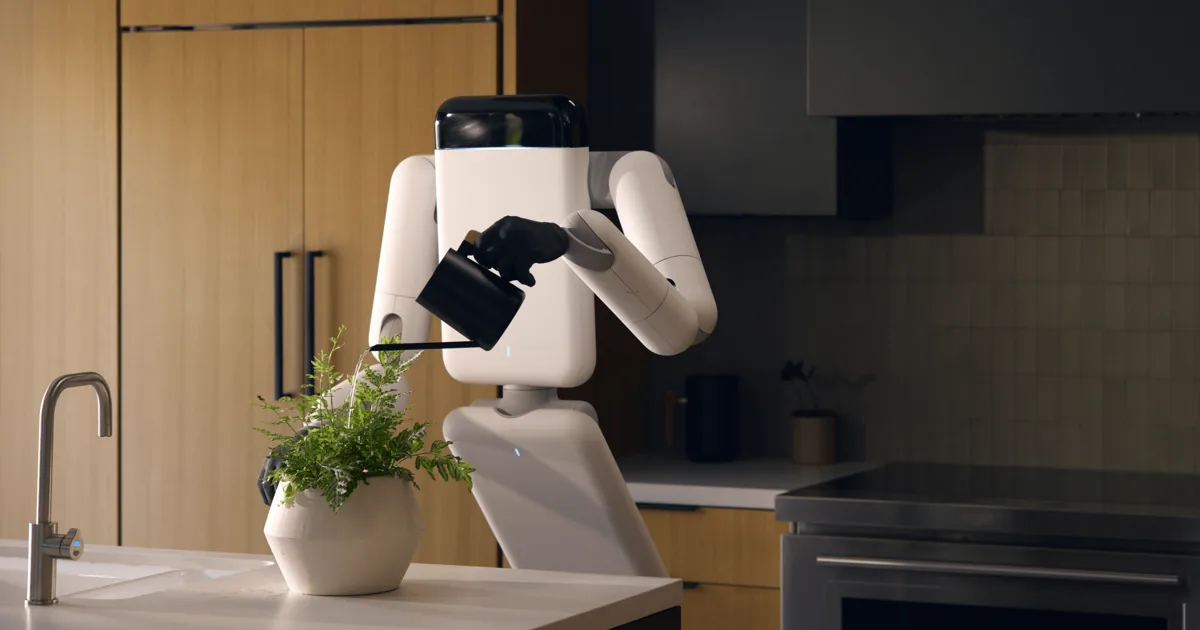
The most interesting thing about the Genesis Eno home robot is that it does not appear to be chasing the usual humanoid fantasy. Many robotics demos still try to convince people that the future helper will walk, gesture, and stand like a person. Eno points in a different direction: a home robot can be useful and socially acceptable without pretending to be a human roommate.
That is a meaningful design choice. Home robots face a different test from factory robots or warehouse machines. They need to move around personal spaces, avoid feeling threatening, handle delicate tasks, and fit into routines that are messy, emotional, and rarely optimized. A less human design can actually help. It lowers expectations and may make the device feel more like an appliance with intelligence than a person-shaped promise.
The gadget angle is important because consumers do not buy robots only for technical achievement. They buy them if the product solves repeatable problems. Vacuum robots succeeded because the task was obvious. A more general home robot has to explain what it does every week, not just what it might do someday. Pouring, carrying, reminding, watching, guiding, and simple assistance all have to feel dependable.
The Verge covered Genesis AI's Eno robot and highlighted its non-human approach to domestic robotics. That framing makes the device more interesting than another walking demo because it suggests the company is thinking about comfort, usefulness, and interaction style rather than only spectacle.
This fits the broader privacy and sensor debate we raised in our smart ring data privacy coverage. A home robot has even more access to private life than a wearable. Cameras, microphones, mapping, object recognition, and AI memory can be helpful, but they require very clear controls if the product is going to earn trust.
Eno's biggest challenge may be expectation management. AI hardware is often announced with broad language, then judged harshly when the first version handles only narrow tasks. The company will need to show what the robot can do reliably today. A shorter list of dependable actions would be more convincing than a long list of future ambitions.
There is also a cost question. Home robots with meaningful manipulation hardware are unlikely to be cheap. If Eno lands at a premium price, it must either serve people with specific needs, offer a strong developer ecosystem, or deliver enough daily convenience to justify the expense. Cute movement and clever demos will not be enough.
Still, the direction is promising. The next useful AI gadget may not be a phone, a headset, or a wearable. It may be a machine that understands the home as a place with objects, habits, and constraints. If Genesis can make Eno practical without making it uncanny, it could move home robotics away from science-fiction theater and toward something people actually invite into the house.
The practical home robot market may also grow through narrow victories rather than one dramatic breakthrough. A robot that reliably helps carry items, monitors a room, assists with reminders, or supports people with mobility limitations can build trust over time. Once trust exists, more complicated behavior becomes easier to accept. Eno's non-human design could support that gradual path because it does not ask buyers to believe they are purchasing a synthetic person. It asks them to evaluate a useful machine with intelligence attached.