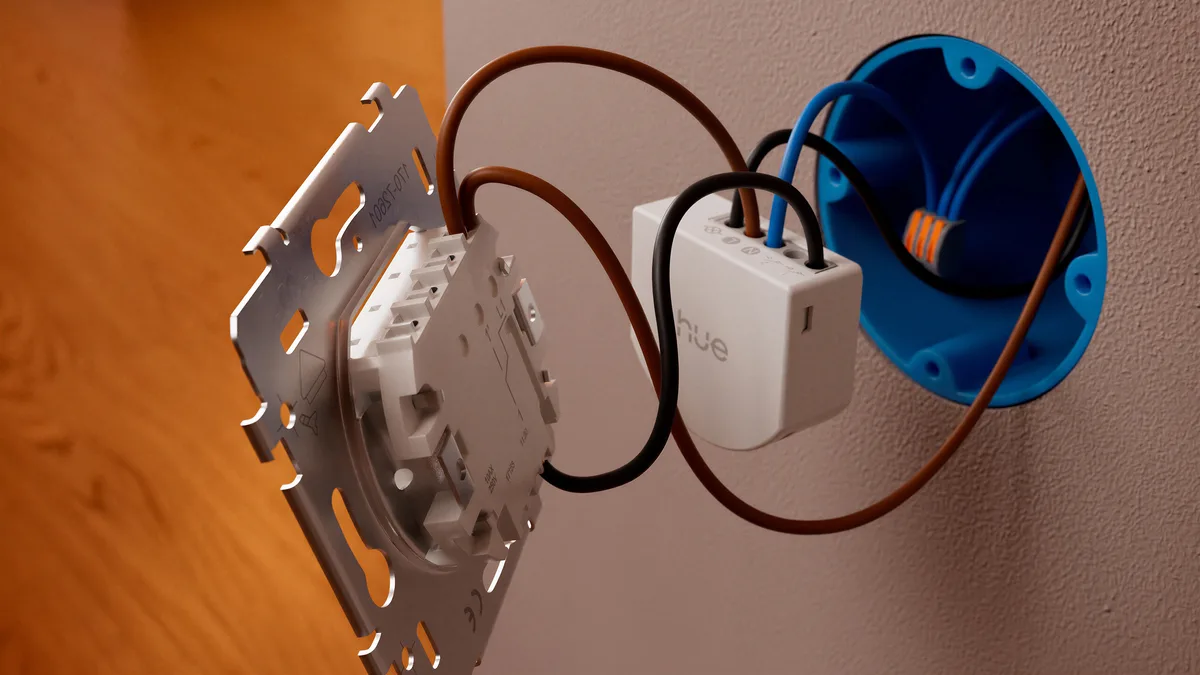
Philips Hue has spent years convincing people to replace ordinary bulbs with connected ones. Its newest move is more subtle and, for many homes, more useful. A wired wall module can sit behind an existing switch and pull a normal light into the Hue ecosystem without forcing every fixture to become a smart bulb. That changes the smart lighting pitch from buying new lamps to modernizing the control layer already in the wall.
The idea matters because smart homes often fail at the switch. A smart bulb can work perfectly until someone turns the physical switch off and removes power. Visitors, children, landlords, and tired homeowners do not always remember which switches must remain untouched. A wall-level device can make the room behave more naturally because the familiar control stays useful while the app, automations, and schedules remain available.
Hue is also refreshing the broader lineup with more affordable Play lamps and upgraded candle bulbs. That combination says the company is trying to widen the system in both directions. Some users still want obvious color lighting products. Others want the system to disappear into old wiring and traditional fixtures. The market needs both if connected lighting is going to move beyond enthusiasts.
The Verge reported that the wired wall modules are launching globally but remain Europe-only for the switch hardware, while the new lamps and bulb updates broaden the Hue portfolio. That regional limit is important. Wall wiring, certification, and switch standards vary, so the most interesting smart home hardware often travels slower than software features.
This fits a larger pattern we recently saw in smart home appliance services moving into everyday gadgets. The next wave of connected devices is less about showing off an app and more about quietly improving ordinary routines. Lighting is a perfect example because the ideal smart light still has to work when a person walks into a room and taps the switch without thinking.
The challenge is installation friction. A product that goes behind a switch usually needs comfort with wiring or a professional installer. That raises the bar compared with screwing in a bulb. Hue will need clear compatibility guidance, strong safety messaging, and enough reliability that people trust the module once it is hidden behind the wall plate. A hidden gadget must be boring in the best possible way.
There is also a platform question. Matter and Thread have made smart home products easier to mix, but Hue remains valuable because its ecosystem is mature. Users buy into scenes, accessories, bridges, bulbs, routines, and third-party support. Wired modules strengthen that ecosystem because they make it harder for lighting control to fragment between old switches and new apps.
The most useful smart home upgrades are often the least dramatic. A wall module will not look as exciting as a new color lamp in a product photo, but it may solve a more common problem. If Hue can make normal switches behave like smart switches without making homes feel complicated, it will make connected lighting feel less like a collection of gadgets and more like infrastructure.