HarmonyOS 7 is not only a platform story for Huawei. It is an app story. The latest Chinese ecosystem update highlights the developer beta, but it also spends plenty of attention on everyday apps such as QQ, Douyin, Sohu News, Ctrip, and Fengchao. That is the correct focus because an operating system can win attention at a conference and still lose users if the apps feel unfinished.
Huawei has spent years moving HarmonyOS from a technical alternative into a daily platform. The hardware base is large, the branding is clear, and the company can now talk confidently about AI agents, cross-device features, and native system services. But for phone owners, the real question is simpler: do the apps they open every day work well enough?
The update suggests Huawei understands that problem. A developer beta creates headlines, but ecosystem updates make the platform livable. Features such as package delivery workflows, social app improvements, travel app input upgrades, and news/audio enhancements are not glamorous. They are the small pieces that decide whether users trust the phone as their main device.
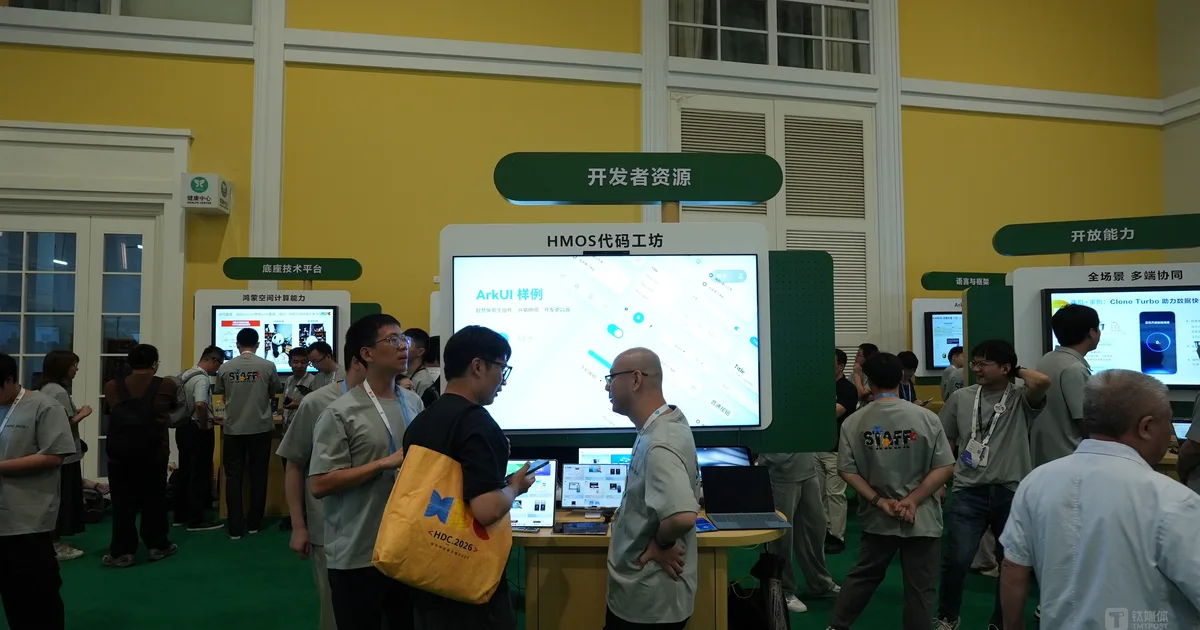
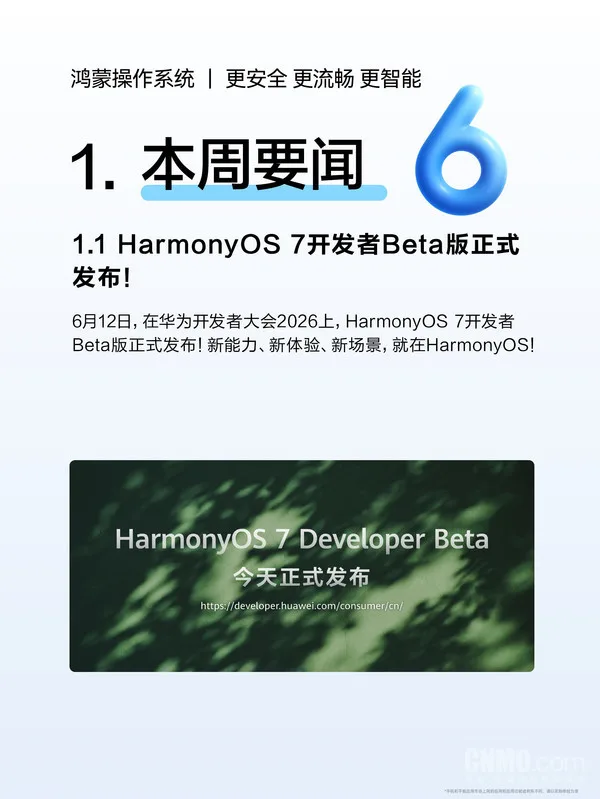
CNMO reported Huaweis weekly HarmonyOS ecosystem update, noting that HarmonyOS 7 developer beta was released at HDC 2026 and that Huawei said HarmonyOS 6-supported devices had passed 66 million while app updates continued across several major Chinese services.
The timing matters because HarmonyOS 7 is being positioned around intelligence and agent behavior. That makes app readiness more important, not less. If the system can understand user intent but the app layer cannot respond smoothly, the magic disappears. Huawei needs developers to treat HarmonyOS as a first-class platform rather than a porting obligation.
That same platform pressure appeared in our earlier coverage of how a new Huawei form factor could stretch phone software expectations. Hardware experiments only work when the app ecosystem can adapt. HarmonyOS 7 has to prove it can support normal phones, foldables, tablets, and connected devices without creating uneven experiences.
The weekly update format is also strategically useful. Instead of asking users to believe one giant keynote, Huawei can show a steady stream of app improvements and partner activity. That cadence matters for confidence. Developers want to see that the platform has active users, and users want proof that their favorite apps are not frozen in a second-tier version. Ecosystem trust is built by repetition, not one announcement.
That makes the beta less of a finish line and more of a public pressure test for Huaweis partners.
For users outside China, the update also shows why global expansion remains complicated. Domestic app momentum can be strong while international app availability remains a separate challenge. Huawei can build a rich Chinese ecosystem, but its wider phone story depends on how much of that experience travels beyond its home market.
The beta itself is only the start. The more important signal is whether weekly app updates keep arriving and whether developers use HarmonyOS-specific features instead of merely matching Android basics. Huawei can announce a smarter operating system, but the ecosystem will decide whether HarmonyOS 7 feels like a platform upgrade or just another system version number.