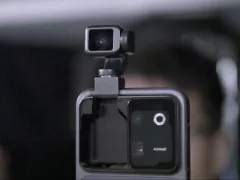
Honor's Robot Phone has always sounded like a concept that could disappear after a trade-show demo, but the latest footage gives it more weight. A phone with a moving camera system is not a normal product decision. It adds mechanical complexity, durability questions, and software challenges. Yet it also gives Honor a rare chance to make smartphone cameras feel physically different again, not just computationally better.
The key idea is a camera module that can behave more like a tiny gimbal. If Honor can stabilize movement, track subjects, and frame video without asking users to carry a separate pocket camera, the phone becomes more than another slab with a better sensor. It becomes a creator tool built around motion. That could appeal to vloggers, parents, travelers, and anyone who records more video than still photos.
IT之家 reported that Honor published Robot Phone footage tied to the Shanghai International Film Festival and noted the expected third-quarter launch window. That timing makes the footage more meaningful. It suggests Honor is preparing the market, not just showing a laboratory toy.
This also fits the direction we saw in our AI wearable coverage. Device makers are searching for new hardware shapes that make AI and imaging feel useful. A camera that can move, track, and react gives the phone a physical interface for intelligence. Instead of burying AI inside a menu, the device can show it through framing and subject awareness.
The concerns are real. Moving parts can break, collect dust, drain power, and complicate waterproofing. Honor will need to explain how the mechanism survives drops, bags, pockets, heat, and years of repeated motion. It will also need camera software that feels calm. If the module hunts, twitches, or overcorrects, users will turn the feature off. The hardware has to feel like assistance, not a trick.
Still, the Robot Phone is one of the more interesting smartphone ideas because it challenges the flat sameness of current flagships. Most phones now compete through sensor size, zoom range, and image processing. Honor is asking whether the camera should physically behave differently. If the final product is durable and the tracking is natural, the Robot Phone could become one of the few 2026 devices that people recognize from across a room.
The ARRI partnership angle also raises expectations. If Honor uses cinema language, buyers will expect more than a motorized party trick. Color science, exposure behavior, audio capture, and stabilization transitions all need to feel deliberate. A moving camera can create shots that a fixed phone cannot, but it can also create strange framing if software decisions are too aggressive. Honor should give users manual control and simple presets, not only automated tracking. That would let casual users get quick results while creators retain enough control to trust the mechanism. The Robot Phone is exciting because it gives smartphone video a new physical tool. It will succeed only if that tool disappears into the act of filming instead of constantly reminding people that a tiny motor is trying to be clever.