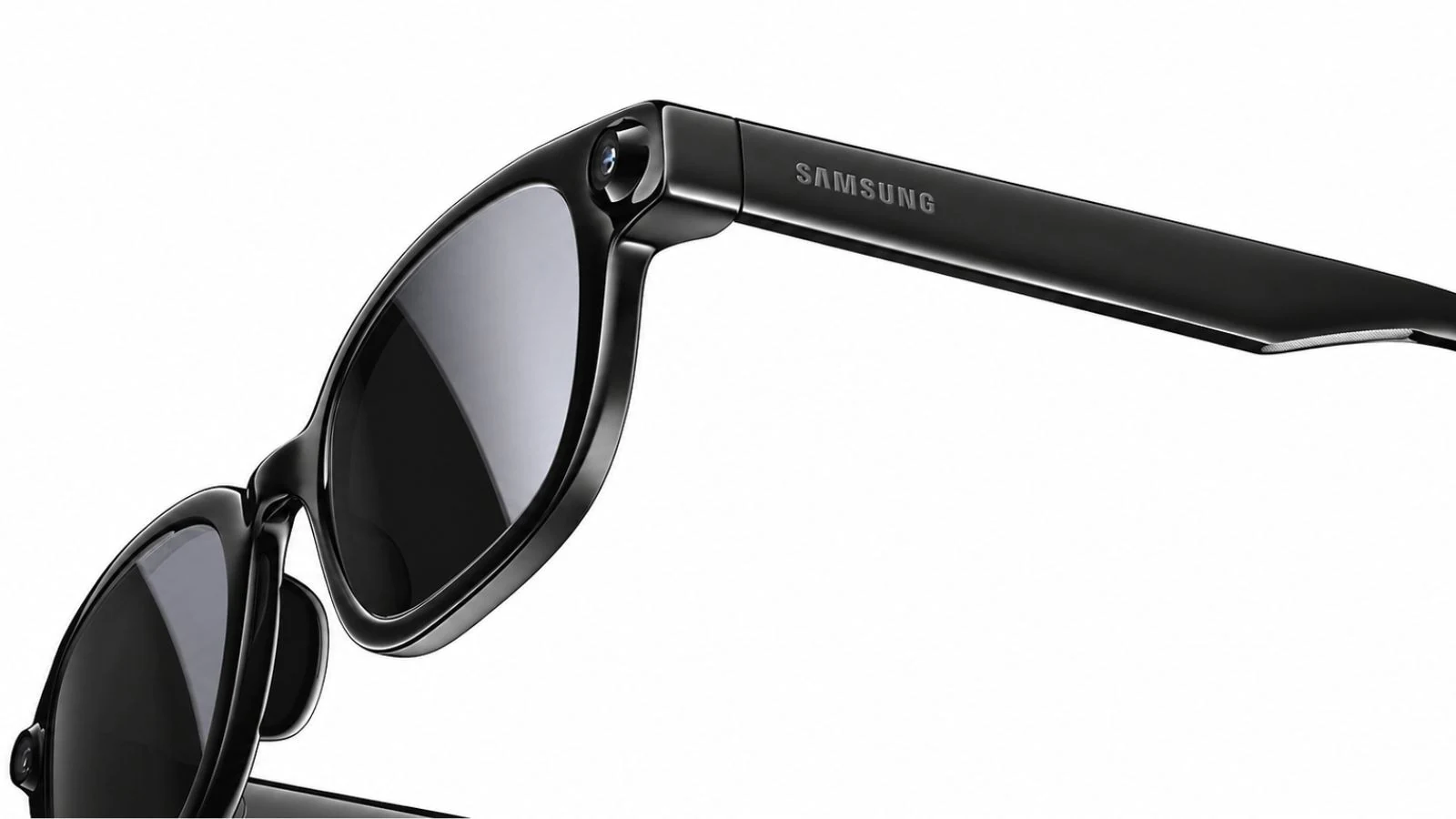
The newest Galaxy Glasses leak is interesting because it does not describe another miniature screen strapped to a face. The reported direction is simpler and stranger: AI-first glasses without a visible display. That would put Samsung closer to an assistant device than a full mixed reality headset, and it could make the product easier to wear in public if the design stays light enough.
The idea also shows how the smart-glasses market is splitting into two groups. One group wants screens, immersive overlays, gaming, spatial computing, and a clear replacement for parts of the phone experience. The other group wants cameras, microphones, audio, translation, memory aids, navigation cues, and quick answers without a bright lens display. Samsung may be reading the second group as the more realistic near-term market.
This lines up with a broader shift in device thinking. Patriotic Tech recently covered AI agent devices built around new form factors, and glasses fit that pattern because they can hear, see, and respond without forcing the user to unlock a phone. The question is whether the convenience is strong enough to overcome privacy concerns.
No display could be a feature
A display-free design sounds limited at first, but it may remove several problems that slowed earlier smart glasses. Displays add weight, heat, battery drain, cost, and social awkwardness. If Samsung keeps the device focused on audio prompts and AI sensing, it can aim for all-day comfort rather than short demonstration sessions. That matters because wearables only work when people actually wear them.
The privacy challenge does not disappear. Camera-equipped glasses still make people nervous, and an AI assistant that listens for context needs clear controls. Samsung would need visible recording indicators, strong local processing where possible, and simple settings that let users shut off sensing modes quickly. Without that, the product could become another example of clever hardware that people do not trust.
The strongest use cases are practical ones: live translation, quick calls, photo capture, reminder prompts, object identification, and hands-free help while walking, cooking, repairing something, or traveling. Those jobs do not require a screen if the audio response is fast and the assistant understands enough context. The weaker use cases are the ones that pretend glasses can replace a phone overnight.
Samsung does not need Galaxy Glasses to be a complete computer to make them important. It only needs them to prove that AI has a wearable home beyond watches and earbuds. If the leak is accurate, the company may be choosing the less flashy route because it has a better chance of becoming normal.
Developers would also need to think differently for a display-free wearable. A phone app can rely on menus, buttons, and visual confirmation. Glasses that mainly use audio and sensors need shorter flows, better intent detection, and fewer moments where the user has to stop and correct the device. That makes the assistant layer more important than the hardware shell. If Samsung builds the glasses around Bixby, Galaxy AI, or a partner model, the product will live or die by how gracefully it handles interruptions, noisy streets, wrong guesses, and private conversations. The display-free direction described by Indian Express makes that restraint feel like the real product test: the best wearable interface may be the one that stays quiet until it has a genuinely useful reason to speak.