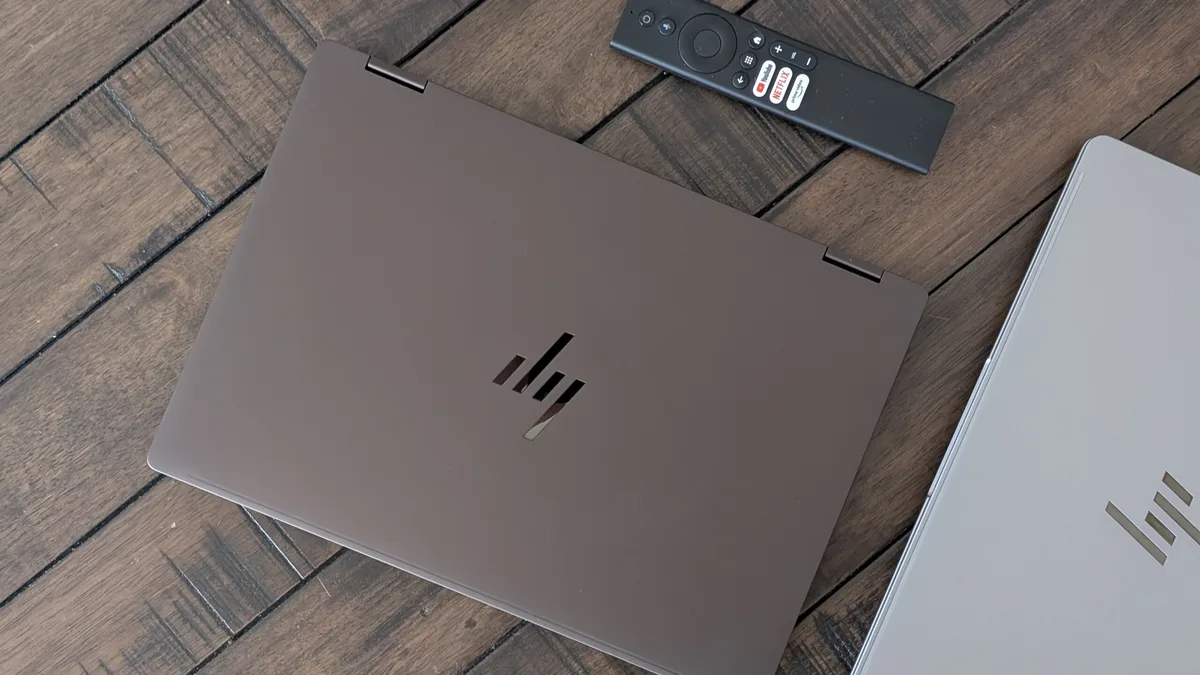
The HP OmniBook X Flip 14 review is a useful reminder that AI PC branding does not excuse the basics. A modern convertible still has to get the keyboard, display, battery life, thermals, hinges, ports, speakers, and webcam right before its NPU becomes a meaningful selling point.
That matters because laptop buyers are being hit with AI labels everywhere. The phrase can hide very different machines, from thin convertibles to workstation-class notebooks. A review that focuses on the complete device helps separate useful hardware from a marketing badge.
It connects naturally with our look at local AI performance and cost. AI acceleration can be valuable, but only when the rest of the laptop is balanced enough for everyday work.
Notebookcheck reviewed the OmniBook X Flip 14 as a real product rather than a slogan, which is the right approach for this category. AI PCs need hands-on judgment because spec sheets rarely reveal fan noise, screen feel, or how the hinge behaves after repeated mode switches.
A convertible design adds extra pressure. Tablet mode, tent mode, pen input, and laptop use all demand different ergonomics. If the device is too heavy, too warm, or too awkward to hold, its flexibility becomes theoretical.
The AI feature set also needs clarity. Buyers should know what runs locally, what requires the cloud, what improves privacy, and which apps actually use the hardware. Otherwise the AI label becomes a future promise attached to a present-day purchase.
HP's challenge is not unique. Every PC maker is trying to make new laptops feel ready for a wave of local assistants, creative tools, transcription, and productivity features that are still unevenly distributed across Windows software.
The review angle is valuable because it grounds that promise in daily behavior. A laptop that wakes quickly, stays quiet, lasts through meetings, and has a good screen will feel more advanced than one that advertises AI but stumbles on fundamentals.
The next signal to watch is software support. If more major apps start using local AI hardware for useful features, machines like the OmniBook X Flip 14 will have a clearer reason to exist beyond the normal upgrade cycle.
A review of a convertible also has to pay attention to small friction points. Stylus storage, palm rejection, screen wobble, charger size, and how quickly the device rotates between modes can shape the experience more than a benchmark chart. Those details determine whether the machine is flexible or merely foldable.
The AI PC label may become more useful over time, but buyers need a good computer today. HP's challenge is to make the OmniBook feel reliable in video calls, travel, classroom use, and desk work, then let AI features add value on top. That order matters because people replace laptops when everyday work gets easier.
Serviceability is another quiet factor. Thin convertibles are often harder to repair or upgrade, and AI PC marketing can distract from memory, storage, and battery decisions that affect long-term ownership. A laptop positioned as future-ready should not become frustrating two years later because the practical configuration was too limited at purchase.
For now, the lesson is practical: AI PC buyers should still read reviews like laptop reviews. The smartest chip in the machine cannot rescue a poor keyboard, weak display, or battery that does not survive the day.