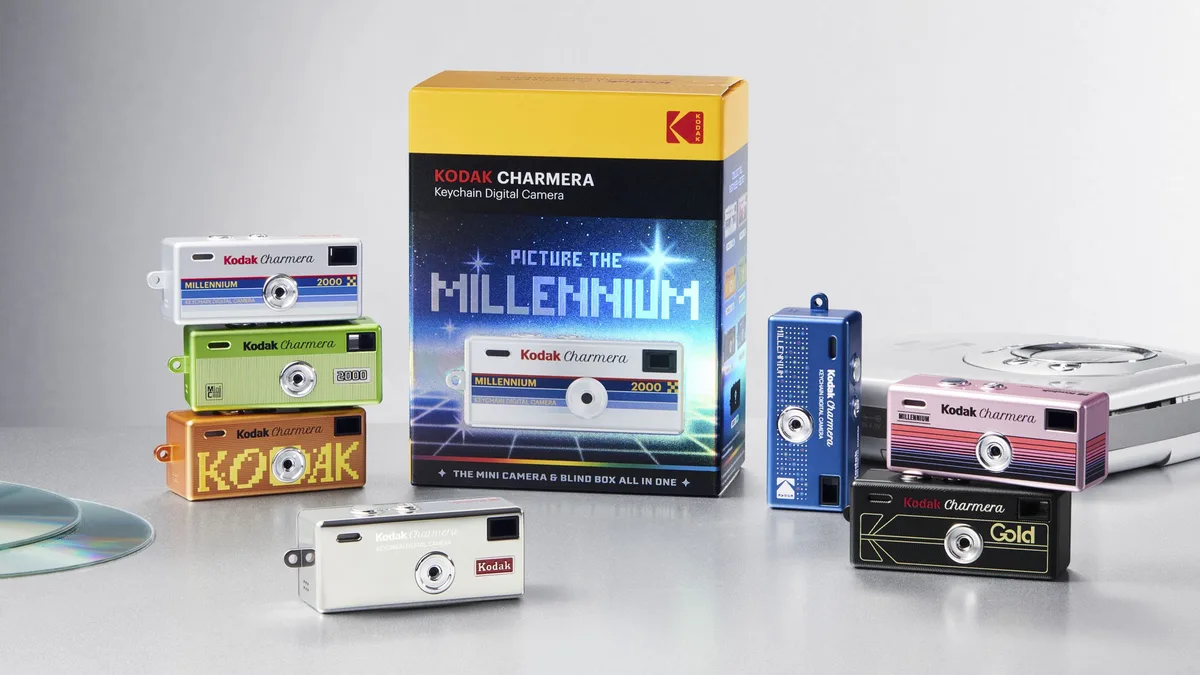
Kodak Charmera Millennium Edition is not chasing camera perfection. That is exactly why it is interesting. The tiny digital camera returns with a Y2K-themed design refresh, new photo filters, new frames, and six regular color looks. In a market full of technically better phone cameras, Kodak is selling something more emotional: a small object that makes intentionally imperfect images feel fun again.
The hardware remains deliberately basic. The Charmera uses a 35mm f/2.4 lens, a tiny 1/4-inch CMOS sensor, and captures 1.6MP JPEG photos. It can also record 1440 x 1080 video at 30fps. None of that sounds impressive by modern camera standards, and it is not supposed to. The appeal is the lo-fi output, the toy-like handling, and the way the camera creates images that do not look like every phone photo in a social feed.
Pricing stays accessible. A single Kodak Charmera costs $34.99 in the United States, 34.99 pounds in the United Kingdom, and 54.99 Australian dollars. The catch is the blind-box format, so buyers do not know which colorway they will receive. Kodak also offers a whole-set box with all six standard variants for $209.94, which is not a discount but does remove the collecting gamble.
TechRadar notes that there is also a limited silver look with a 1-in-49 chance of appearing. That collector angle is part of the product, not just packaging. For readers who prefer higher-end creator gear, our Insta360 Luna Ultra release coverage shows the opposite end of the small-camera market.
Why A Bad Camera Can Still Be Good Hardware
The Charmera works because it is honest about its limits. A phone camera tries to make everything sharp, bright, corrected, and shareable. A lo-fi pocket camera gives users a reason to slow down and accept mistakes. That can be creatively useful. Grain, blur, harsh flash, small sensors, and strange color can become a style when the buyer understands what they are getting.
The Y2K edition leans into that idea. The colors and filters are not only cosmetic. They connect the camera to a memory of early web photos, camcorders, cheap webcams, and small digital compacts. For younger buyers, that look feels like a discovered style. For older buyers, it may feel like a portable piece of tech nostalgia.
The blind-box model is more complicated. It can make the product feel collectible and gift-friendly, but it can also frustrate buyers who simply want a specific color. Kodak is clearly treating the Charmera as part toy, part camera, and part collectible. That is acceptable at $34.99, but it would feel more questionable at a higher price.
The real risk is availability. The earlier Charmera release sold quickly, and collectible gadget drops can become more expensive in resale channels than they are worth. Buyers should remember that the image quality is intentionally poor. Paying too much would defeat the point of an inexpensive fun camera.
Still, the Millennium Edition shows why small cameras are not dead. Phones won the quality battle, but they did not win every mood. Sometimes a gadget succeeds because it creates a different ritual. The Charmera is not better than a phone camera. It is different enough to earn a place in a bag.