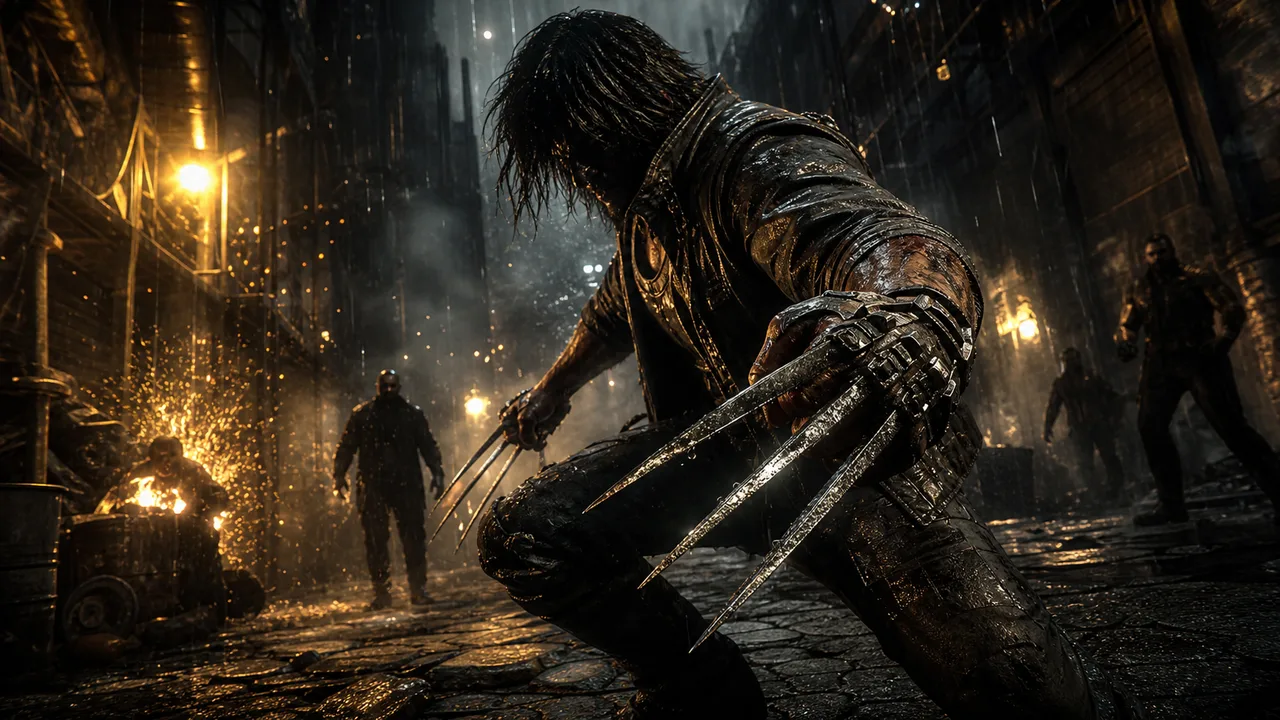
Marvels Wolverine has moved from promise to pressure. With a September 15, 2026 PlayStation 5 date attached, Insomniac's mutant action game is no longer just the mysterious project announced beside Spider-Man years ago. It is now one of Sonys biggest single-player releases on the calendar, and it has to answer a difficult question: how does a studio known for agile, optimistic superhero movement build a game around a character defined by pain, violence, healing, and restraint?
Wolverine should not feel like Spider-Man with claws. Logan moves differently, solves problems differently, and carries a different emotional burden. The fantasy is not freedom across a skyline. It is durability, ferocity, tracking, brutal close-range decisions, and the sense that every fight costs something even when the body heals. Insomniac has the animation talent to sell that, but the combat design needs weight. A Wolverine game that feels too clean would miss the point.
The PlayStation 5 exclusivity also changes the expectation. This is not a cross-platform launch trying to satisfy every machine at once. It should be tuned tightly for Sony hardware, with fast loading, dense environments, responsive melee, and cinematic transitions that do not fight the player. That focus gives Insomniac an advantage, but it also removes excuses. Players will expect polish because the target is clear.
The Verge included Wolverine among the major Summer Game Fest storylines around Sonys renewed single-player push, and that framing fits the moment. After live-service turbulence across the industry, a defined character action game from a proven studio feels less like a safe retreat and more like an overdue correction.
The story will matter as much as the combat. Wolverine has decades of comic history, but Insomniac's best move is to tell an original, self-contained story that uses that history as texture rather than homework. Logan works when his past is present but not fully explained, when violence is tempting but not triumphant, and when the people around him force choices beyond survival. The game should not turn every emotional beat into a lore reference.
There is also a larger Marvel games context. Players have seen excellent licensed games and uneven ones. Brand power is not enough. The standard set by Insomniac's Spider-Man games means Wolverine will be judged on feel first: how claws connect, how enemies react, how healing is represented, how stealth and rage coexist, and whether boss encounters avoid becoming scripted animations. The market is also full of major 2026 action games, from Gears of War: E-Day to TMNT: The Last Ronin, so Wolverine needs its own temperature.
If Insomniac builds around Logan rather than around a generic superhero template, September could give PlayStation one of its most distinct action games in years. The character has always been about surviving what should break him. The game needs to make that survival playable, not just cinematic.
A smaller map could be a strength here. Wolverine does not need endless towers or collectibles to prove value. Dense interiors, hostile wilderness, labs, bars, and pursuit routes could serve the character better than a giant city. Logan's world should feel personal, dangerous, and scarred, not merely large.