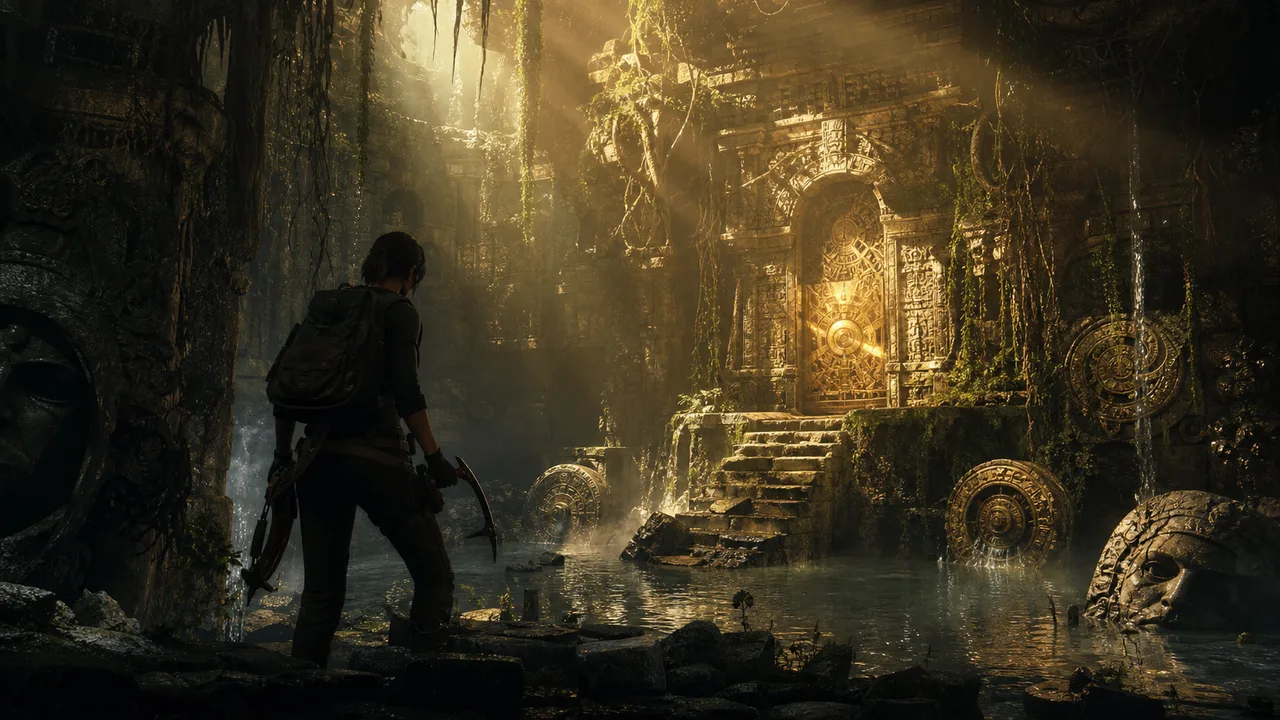
Tomb Raider: Legacy of Atlantis sounds like the right Lara Croft project at the right time, but the reported delay may be the most encouraging part of the latest news. A modern reimagining of the original Tomb Raider has to do more than make caves prettier. It has to rebuild the puzzle-driven, lonely, acrobatic feel of classic Lara while acknowledging that modern players expect smoother movement, better combat feedback, and fewer archaic frustrations. That is a hard balance, and rushing it would be a waste.
The appeal of Legacy of Atlantis is not simply nostalgia for dinosaurs and ancient ruins. It is the chance to reposition Lara as an expert explorer again. The survivor trilogy gave her a strong origin arc, but it also leaned heavily on trauma, bow combat, and cinematic urgency. Classic Tomb Raider was cooler, quieter, and more spatial. Lara entered impossible places, studied them, and solved them through movement and observation. A good reimagining should restore that confidence.
The demo impressions suggest the project is aiming for that puzzle-first spirit, with classic spaces like The Lost Valley restructured rather than copied. That sounds promising because one-to-one remakes can become predictable, while total reinventions can lose the map memory that made the original beloved. The sweet spot is a room that old fans recognize emotionally but still have to read with fresh eyes.
GamesRadar reported that the game has been delayed to February 12, 2027 after hands-on impressions revealed promise alongside control and environmental issues. That is exactly the kind of delay that can help an adventure game. Puzzles, climbing, ledge detection, camera behavior, and animation priority need more polish than trailers can show.
This is also a competitive moment for remakes. Resident Evil Veronica is modernizing survival horror, and Assassins Creed Black Flag Resynced is rebuilding one of Ubisofts most popular open-world adventures. Tomb Raider cannot win by being louder. It has to win by making exploration feel intelligent. A door opening after a solved mechanism should feel more satisfying than another firefight.
Crystal Dynamics and Flying Wild Hog also have to decide what danger means. The original Tomb Raider used isolation and instant consequences. A modern version can soften the harshest edges without turning every climb into guided parkour. Players should still feel exposed when crossing a broken bridge, diving into a submerged passage, or facing a creature in a space too small for comfort. Adventure needs risk, not only spectacle.
If the delay is used for precision rather than feature creep, Legacy of Atlantis could give Lara the reset she deserves. Not a reboot of her personality, and not a grim survival sequel, but a confident expedition built around tombs, puzzles, acrobatics, myth, and a protagonist who belongs in impossible places.
Camera and animation priority deserve special attention. Tomb Raider feels wrong when Lara sticks to surfaces automatically, but it also feels dated when a missed input sends her into cheap failure. The remake has to communicate grip, momentum, jump distance, and danger with enough clarity that mistakes feel owned by the player.