Microsoft Flight Simulator has always been more than a game about planes. It is one of the clearest consumer examples of a living digital twin: a software world built from maps, aerial data, photogrammetry, cloud streaming, weather systems, and constant updates. Every city update makes that point stronger.
The latest Midwest city update matters because it shows how simulation platforms can keep improving after release. In older game models, a world shipped and stayed mostly fixed. In modern simulation, the world can be refreshed as better data becomes available. That makes the product feel closer to an evolving geographic platform than a static entertainment title.
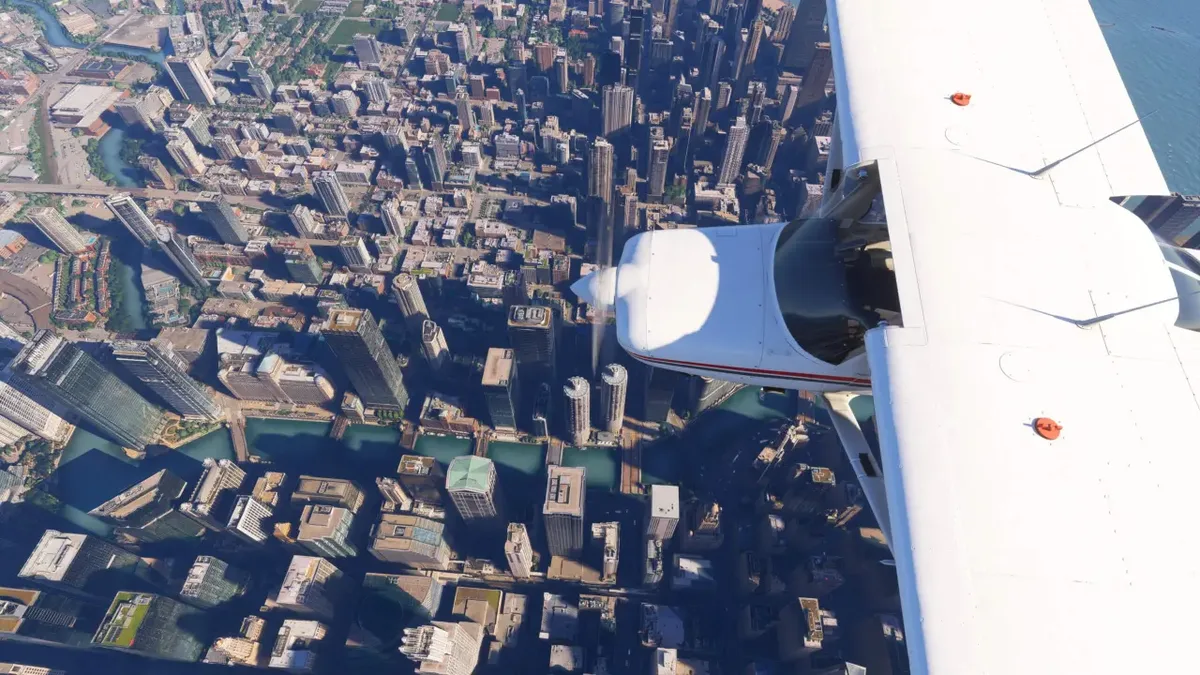
Neowin reported that Microsoft Flight Simulator's City Update 15 enhances Midwest cities. The update is framed for players, but the underlying technology is broader: large-scale 3D reconstruction, cloud delivery, and simulation fidelity are moving into mainstream experiences.
That matters for other industries too. Autonomous vehicle developers, for example, need richer simulated environments, as discussed in our human-eye sensor coverage. The better a digital world represents lighting, geography, buildings, and movement, the more useful it becomes for testing systems before they operate in the real world.
Flight Simulator also shows how cloud infrastructure can support a product that would be difficult to package locally. A detailed world at global scale is too large to treat like a normal game download. Streaming, caching, and selective updates make the experience possible. That makes the game a showcase for cloud architecture as much as graphics technology.
The challenge is consistency. Digital twins are only as good as the data and rendering pipeline behind them. A beautiful city block beside a poorly modeled one can break immersion. Updates need to improve quality without creating strange mismatches. That is a hard problem because the real world is uneven, and source data varies by region.
Still, the direction is clear. Simulation platforms are becoming richer, more current, and more useful beyond entertainment. Flight Simulator may be a game first, but it is also a demonstration of how digital replicas can become living products. Each city update makes the virtual world feel less like a backdrop and more like infrastructure.
There is also an archival value to these updates. A detailed simulation can preserve how a city looked at a moment in time, even as buildings change and skylines evolve. That may eventually matter for education, planning, tourism, and historical reconstruction. The same platform that lets a player fly over a refreshed Chicago or Kansas City can help people understand geography in a more tactile way. Flight Simulator succeeds because it makes data feel experiential. That is the real promise of digital twins: not just accuracy, but understanding.
For Microsoft, the benefit is strategic. A simulator that depends on cloud, mapping, AI-assisted scenery, and gaming hardware becomes a showcase for multiple parts of the company at once. It is entertainment, but it also demonstrates platform capability. That makes each city update more than cosmetic. It reinforces the idea that rich digital worlds are ongoing services.