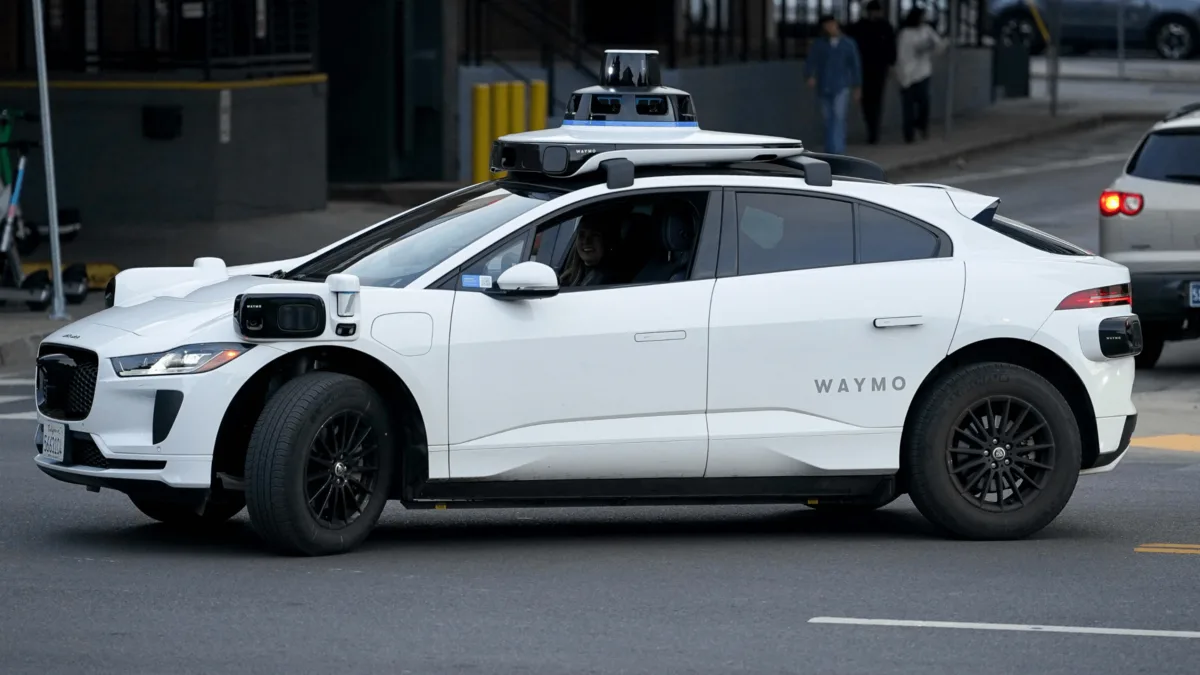
Self-driving cars have improved enormously, but the road is still a hostile visual environment. Light changes quickly. Shadows stretch across lanes. Rain scatters reflections. Headlights flare. Tunnels turn daylight into darkness in seconds. Human drivers handle many of these transitions without thinking, but autonomous systems have to translate messy photons into reliable decisions.
That is why sensor research inspired by the human eye is worth attention. The human visual system does not simply capture an image like a camera. It adapts, filters, prioritizes, and handles contrast in ways that are still difficult for machines. If vehicle sensors can borrow even part of that behavior, autonomy may become more robust in the everyday conditions that make edge cases so hard.
Popular Science reported on human-eye inspired sensors that could help self-driving cars see better. The practical goal is not to make cars more human for its own sake. It is to help perception systems remain dependable when lighting conditions change faster than ordinary cameras handle well.
This connects with the digital-world-building we discussed in the Microsoft Flight Simulator city update story. Simulation and sensing are two sides of the same autonomy problem. Vehicles need better real-world perception, and developers need richer simulated environments to test how perception behaves before it is trusted on public roads.
Better sensors will not solve autonomy alone. Vehicles still need planning software, maps, fail-safe systems, regulatory approval, and clear accountability. But perception is foundational. If the system misunderstands the scene, every later decision starts from the wrong premise. That is why improvements in sensor behavior can matter as much as improvements in driving policy.
The commercial question is whether these ideas can be manufactured reliably and affordably. Autonomous vehicle hardware must survive heat, vibration, weather, and years of use. A clever lab sensor becomes useful only when it can be integrated into vehicles at scale without making the bill of materials unrealistic.
Still, the direction is promising. The industry has spent years adding more sensors, more compute, and more training data. The next step may be making sensors smarter at the point of capture. Roads are messy because the real world is messy. A sensor that handles that mess more like a human eye could make autonomous driving less brittle where it matters most.
There is a useful humility in this research direction. Instead of assuming more pixels and more compute are always enough, it asks whether the sensing layer itself can be better adapted to the world. That could reduce downstream complexity and make perception systems less dependent on brute-force correction. Autonomous vehicles still have a long road ahead, but better sensing can make each software decision more grounded. If the car begins with a clearer, more stable view of the scene, every layer above it has a better chance of making the right call.
Automakers will still need to explain how any new sensor behaves when it fails. Better vision is useful only if the vehicle knows when confidence drops and can respond safely. That may mean redundancy with radar, lidar, maps, or conservative driving behavior. The best sensor is not the one that never struggles, but the one whose limits are understood.