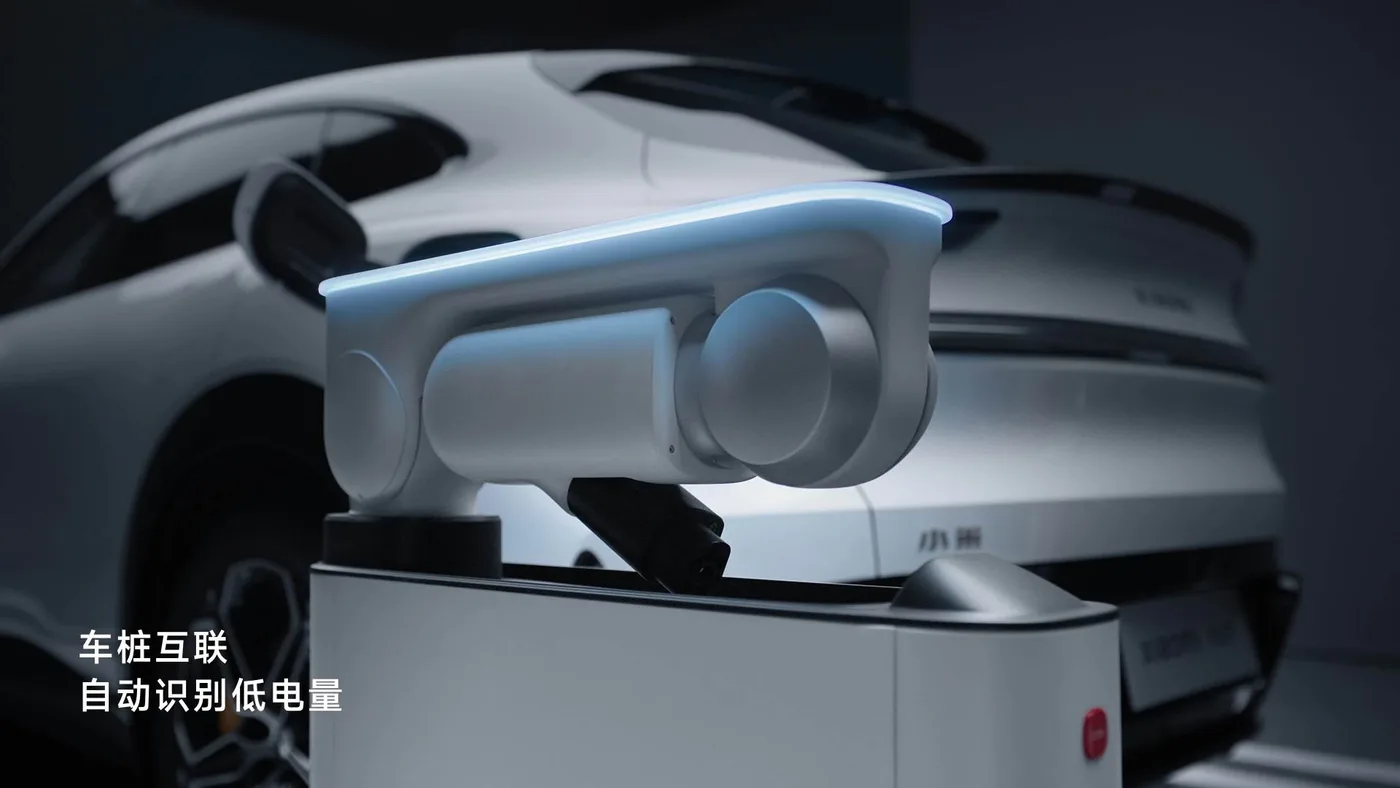
Xiaomi Auto's home charging robotic arm is a small but telling step in the automation of electric vehicle ownership. Public charging networks get most of the attention because they determine long-distance convenience, but daily EV use is shaped at home. Plugging in is not difficult, yet it is repetitive, weather-dependent, and easy to forget. A robotic arm that connects and disconnects the charging cable turns that routine into a background task.
The product also fits Xiaomi's broader strength: blending hardware, software, and smart-home behavior into one consumer workflow. A home charging arm is not only a mechanical accessory. It needs parking-position tolerance, vehicle communication, charging-status awareness, safety interlocks, and remote control. If it works well, the driver parks, walks away, and the system handles the rest. That is the kind of convenience that can make EV ownership feel less like managing a device and more like using infrastructure.
The automation angle matters because future garages may become part of the smart-home stack. EV charging, battery scheduling, solar integration, home energy storage, and utility pricing can all interact. We have covered the movement toward agent-like control in connected homes through AI smart-home appliance integrations, and EV charging is a natural next layer for that same idea.
Kuai Technology reports that Xiaomi's home charging robotic arm is expected to go on sale in the fourth quarter of 2026. Xiaomi says the device can automatically insert the charging connector after parking, remove it after charging reaches the target, and allow users to start charging remotely when the vehicle is within the arm's reachable range.
The technical challenge is less glamorous than a vehicle launch but still serious. The arm must align safely with the charging port despite small parking differences. It must avoid damaging the vehicle, cable, wall box, or people nearby. It must also behave predictably when charging fails, when the port door is blocked, or when someone interrupts the process. Automation that handles normal cases but fails awkwardly in edge cases will not earn trust in a garage.
If Xiaomi gets those details right, the charging arm could become more than a novelty. It would show how EV companies can improve ownership around the car, not only inside it. The best EV experience may eventually include the vehicle, charger, home energy system, and automation hardware working together. Xiaomi's robotic arm points in that direction: less manual plugging, more scheduled energy use, and a garage that quietly handles one of the most repeated EV tasks.
The product could also help drivers with accessibility needs. Plugging in a charging cable can be awkward for older users, people with limited mobility, or anyone dealing with heavy cables in tight garage spaces. Automation is often marketed as luxury, but it can also remove friction for users who find routine physical tasks difficult. If Xiaomi prices the arm sensibly, it may broaden the idea of smart charging beyond premium showrooms. The practical test will be safety: the arm must detect poor alignment, stop around obstacles, and fail gracefully if the vehicle is parked outside its ideal position.