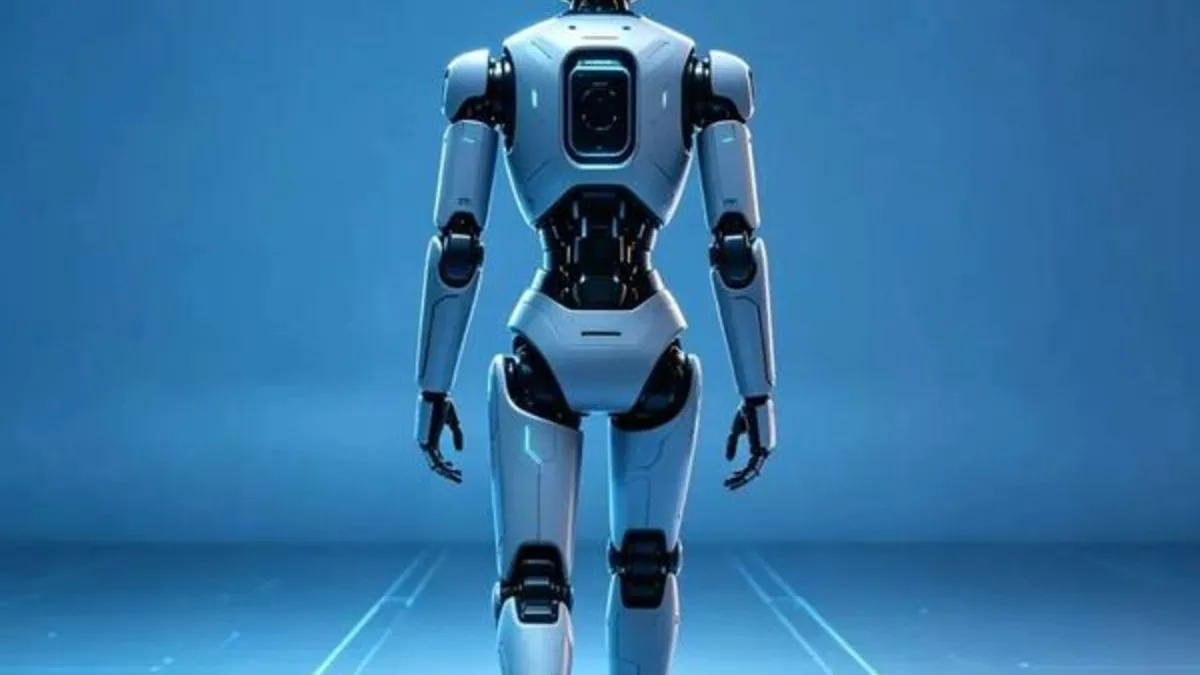
A six-arm embodied intelligence robot is not just a visual spectacle. It points to a serious question in robotics: when does adding more limbs make a machine more useful rather than merely more complicated? Most industrial robots are optimized around one arm, one tool, and one defined work cell. Humanoid robots imitate the human body for general environments. A six-arm system suggests a third direction, where the robot is built around task density, simultaneous manipulation, and spatial flexibility rather than human resemblance.
Multi-limb design can be valuable in factories, laboratories, repair work, and hazardous environments where several coordinated actions happen at once. One arm can hold a part, another can operate a tool, another can stabilize the structure, and another can inspect the result. Humans do this with two arms and a lot of repositioning. A robot with more manipulators could reduce handoff time if its control system is good enough. The challenge is that coordination complexity rises quickly with each added limb.
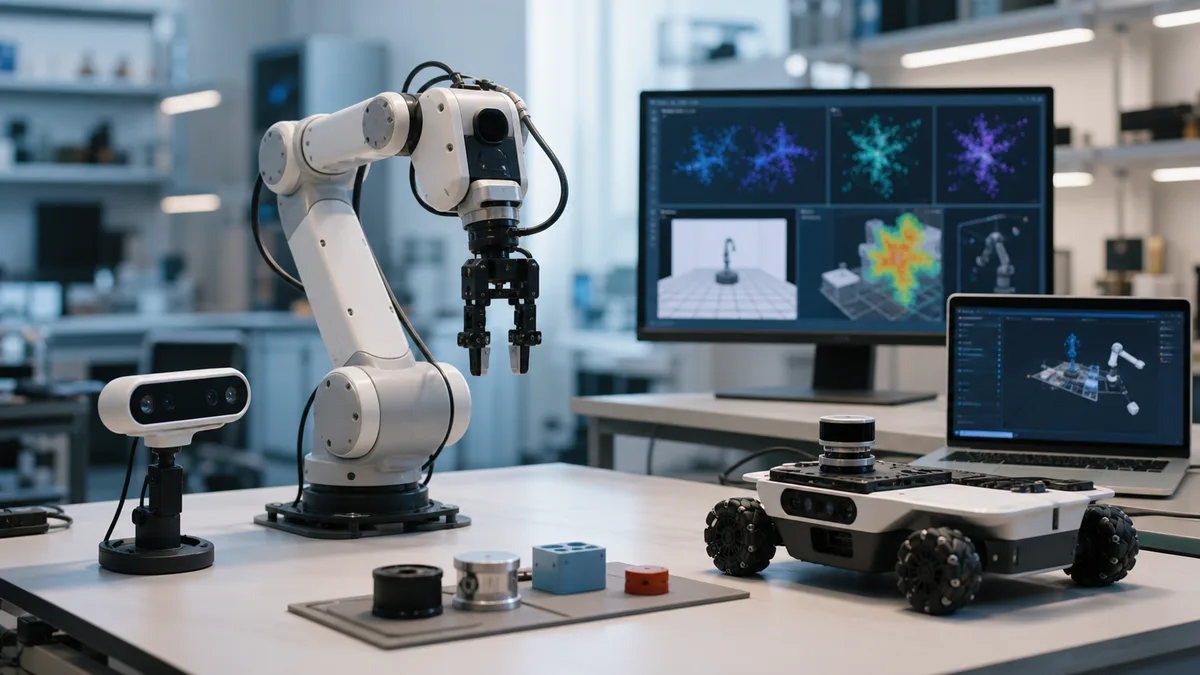
This is where embodied AI becomes more than a buzzword. A multi-arm robot needs perception, planning, collision avoidance, force control, and task sequencing. It has to understand not only where objects are, but how each arm's movement affects the others. That connects to the broader automation shift we covered in robotics and autonomous machine economics, where hardware only becomes useful when the control layer can handle messy real-world tasks.
Kuai Technology reports that the “Six-Arm Xuanjia” appeared at the Shanghai fair as a spatially heterogeneous six-arm embodied intelligence robot. The report describes it as a global debut and frames the product around a more complex robotic structure than standard single-arm industrial systems.
The term spatially heterogeneous is important because it implies the arms may not all be identical or positioned for the same task. That could allow the robot to combine heavy manipulation, fine work, sensing, and stabilization in one platform. It could also make programming and maintenance harder. Industrial customers do not buy robots for novelty. They buy uptime, repeatability, safety certification, and a clear return on investment. A six-arm robot must prove it can do enough extra work to justify the extra complexity.
The debut is still useful because robotics needs more experiments in form factor. Humanoids attract attention, but not every automation problem is best solved by copying the human body. Factories already use machines shaped around tasks. If embodied AI can make unusual mechanical designs easier to control, robots may become more diverse rather than more humanlike. The six-arm concept is a reminder that the future of robotics may look less like one universal body and more like many specialized bodies guided by smarter software.
The next question is whether such machines can be taught efficiently. Traditional industrial robots are programmed with precision, but that process can be slow and expensive. Embodied AI promises more adaptable learning from demonstration, simulation, and feedback. A six-arm platform will test that promise sharply. If every new task requires extensive custom engineering, the market will remain narrow. If the robot can learn coordinated workflows more quickly, the design becomes much more compelling.