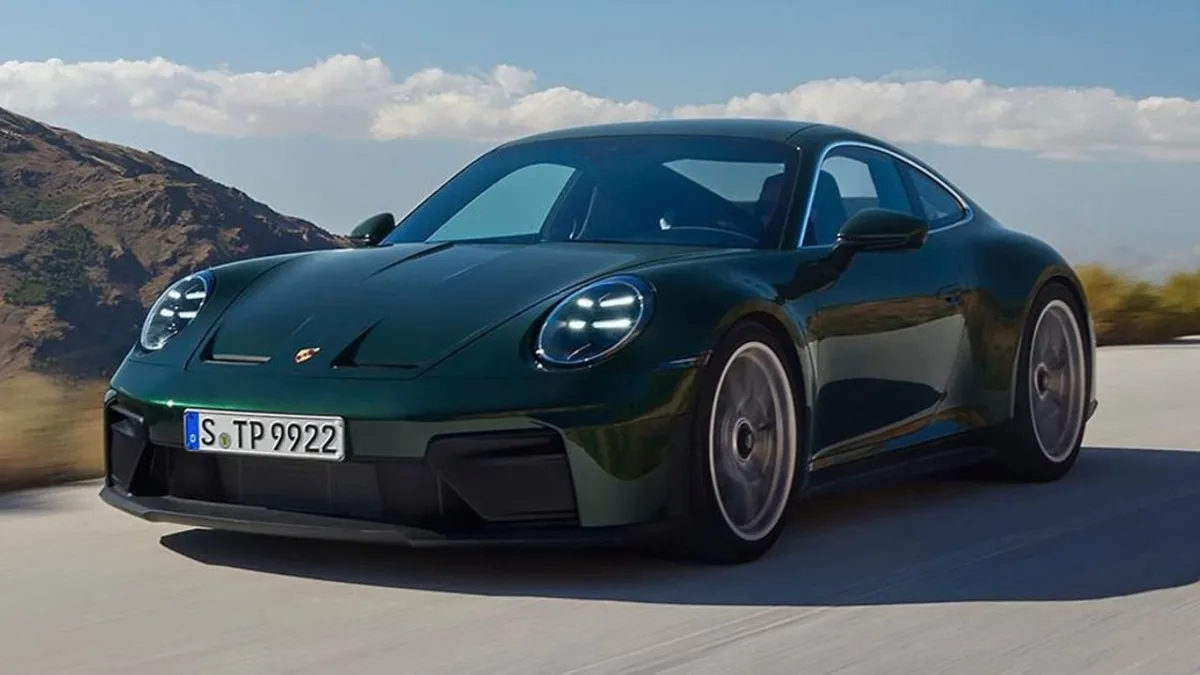
Porsche ruling out a battery-electric 911 is not surprising, but it is still important. The 911 is not just another model in Porsche's lineup. It is the car that defines the brand's engineering personality, visual language, and emotional credibility. Moving it too quickly into a full EV format would risk solving a regulatory problem while creating an identity problem.
The 911 has always been shaped by constraints: rear engine layout, compact proportions, mechanical feel, and a constant effort to modernize without losing the original idea. A heavy battery pack would change that balance. Porsche has proved it can build fast EVs with the Taycan and upcoming electric models, but speed alone is not what makes a 911 a 911.
That does not mean the 911 will remain frozen in time. Hybrid assistance, synthetic fuels, efficiency improvements, and careful emissions management can keep the car alive while the rest of the portfolio electrifies more aggressively. Porsche's challenge is to protect the 911's character without making it seem out of step with the industry.
CarExpert reported that Porsche's CEO has ruled out a battery-electric version of the 911 sports car. The decision places the 911 in a different category from Porsche's broader EV rollout, where electric SUVs and sedans can carry more of the emissions and technology transition.
The move sits in contrast to the broader EV momentum seen in stories like the MG 07 dual-powertrain reveal. Mainstream and emerging brands can use EVs to redefine themselves. Porsche has to decide where EVs expand the brand and where they might dilute it. The 911 clearly falls into the second category for now.
There is also a customer reality. Many 911 buyers are not asking for a silent, heavy, all-electric sports car. They may accept electrification when it improves response, torque fill, or lap-time consistency, but they still want steering feel, braking confidence, compactness, and a powertrain that feels alive. A hybrid 911 can support those goals more naturally than a full EV.
Porsche still needs to manage optics. Saying no to an electric 911 could be framed as resistance, especially in markets with aggressive EV policies. The company will need to show progress elsewhere: cleaner production, electric Macan and Cayenne development, Taycan improvements, and credible investment in low-carbon fuels. Protecting the 911 only works if the rest of the company keeps moving.
The decision is ultimately a brand discipline move. Porsche understands that not every icon should be electrified at the same pace. The 911 can become more efficient and more technically advanced without losing the qualities that made it valuable. For sports-car buyers, that may be more reassuring than any battery range claim.
The 911 decision also gives Porsche room to make its EVs more convincing on their own terms. An electric Macan or Cayenne can be judged as a modern luxury performance vehicle, not as a replacement for a rear-engine sports car. That separation is useful. It lets Porsche sell quiet electric strength to one customer and precise combustion drama to another without pretending both buyers want the same thing. In a market full of forced conversions, that kind of product honesty may become a competitive advantage.