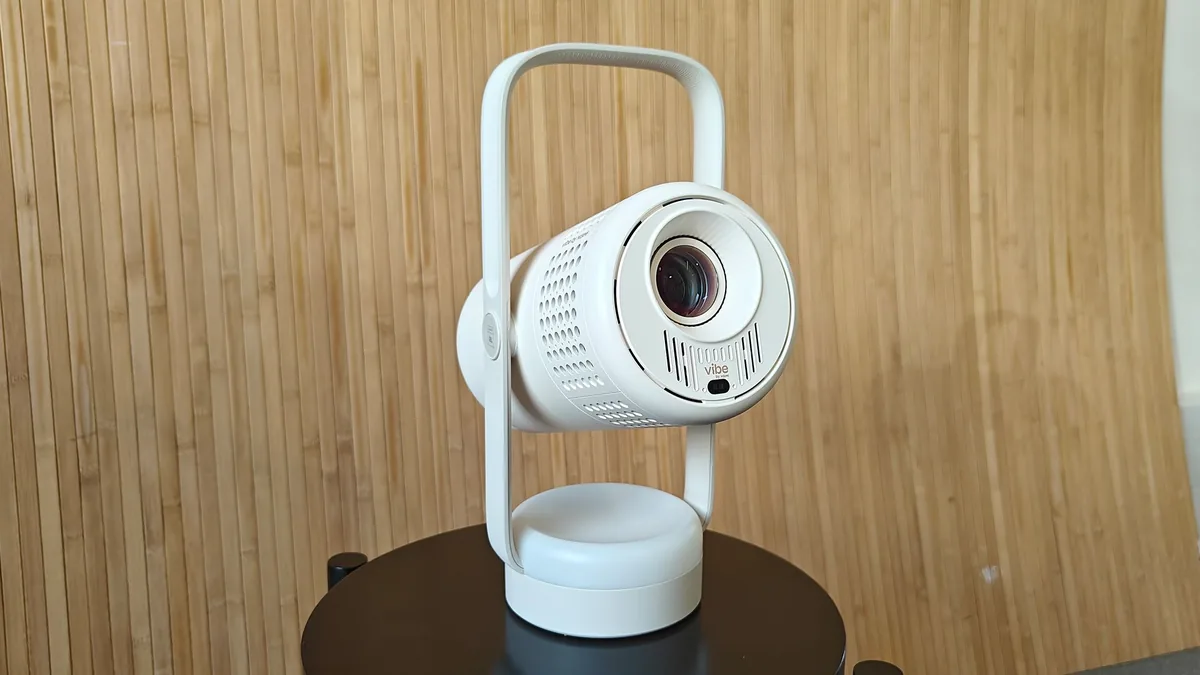
Portable projectors have quietly become one of the more interesting living-room-adjacent gadgets. A new deal tied to outdoor match viewing shows why. The appeal is no longer only about replacing a television. It is about creating a screen wherever the moment makes sense: a garden, a bedroom wall, a dorm room, a small apartment, or a weekend trip where carrying a normal display would be absurd.
The category has improved because the basics have improved. Compact projectors now offer better brightness, easier auto-focus, smarter keystone correction, built-in streaming options, and batteries or power options that make quick setup less annoying. They still cannot beat a good TV in daylight, but they no longer feel like novelty boxes that require patience before every use.
This trend also overlaps with the way people use phones, tablets, and handheld devices for media. A portable projector becomes a larger shared screen for content that starts on a smaller gadget. That makes it part of the same mobility story as portable gaming and media device coverage, where compact hardware is expected to deliver entertainment without being tied to one room.
What Hi-Fi? highlighted a portable projector deal positioned around fast delivery for outdoor viewing. The deal itself will change, but the timing is useful. Sports, summer evenings, and early shopping promotions create exactly the kind of use case that makes a small projector feel less like a luxury and more like a flexible household gadget.
Buyers should still be careful with expectations. Brightness ratings can be confusing, speakers are often only acceptable, and cheap projectors may struggle with focus uniformity or app support. The best portable projector is not the one with the biggest claim on the box. It is the one that sets up quickly, looks good enough in the lighting you actually use, and does not require a separate pile of accessories.
The deal also shows how home cinema is becoming more modular. Not everyone wants a fixed projector mount, a large receiver, or a dedicated theater room. Many users want a simple way to make a bigger picture for one evening. That practical use case favors smaller projectors with automatic setup and friendly software over complex enthusiast gear.
Portable projectors still have limitations, but they now deserve a place in gadget conversations. As prices drop during major sale periods, more buyers can treat them as occasional-use entertainment tools rather than full TV replacements. That is the right frame: a compact screen maker for moments when a phone is too small and a television is in the wrong place.
The strongest portable projector setups are also the simplest ones. A single power cable, quick wireless audio, a familiar streaming interface, and automatic image correction do more for everyday use than a long list of technical claims. People buy these gadgets for spontaneous moments, so every extra setup step weakens the appeal. The deal is useful only if the projector can be ready before the group loses interest and returns to watching on a phone.