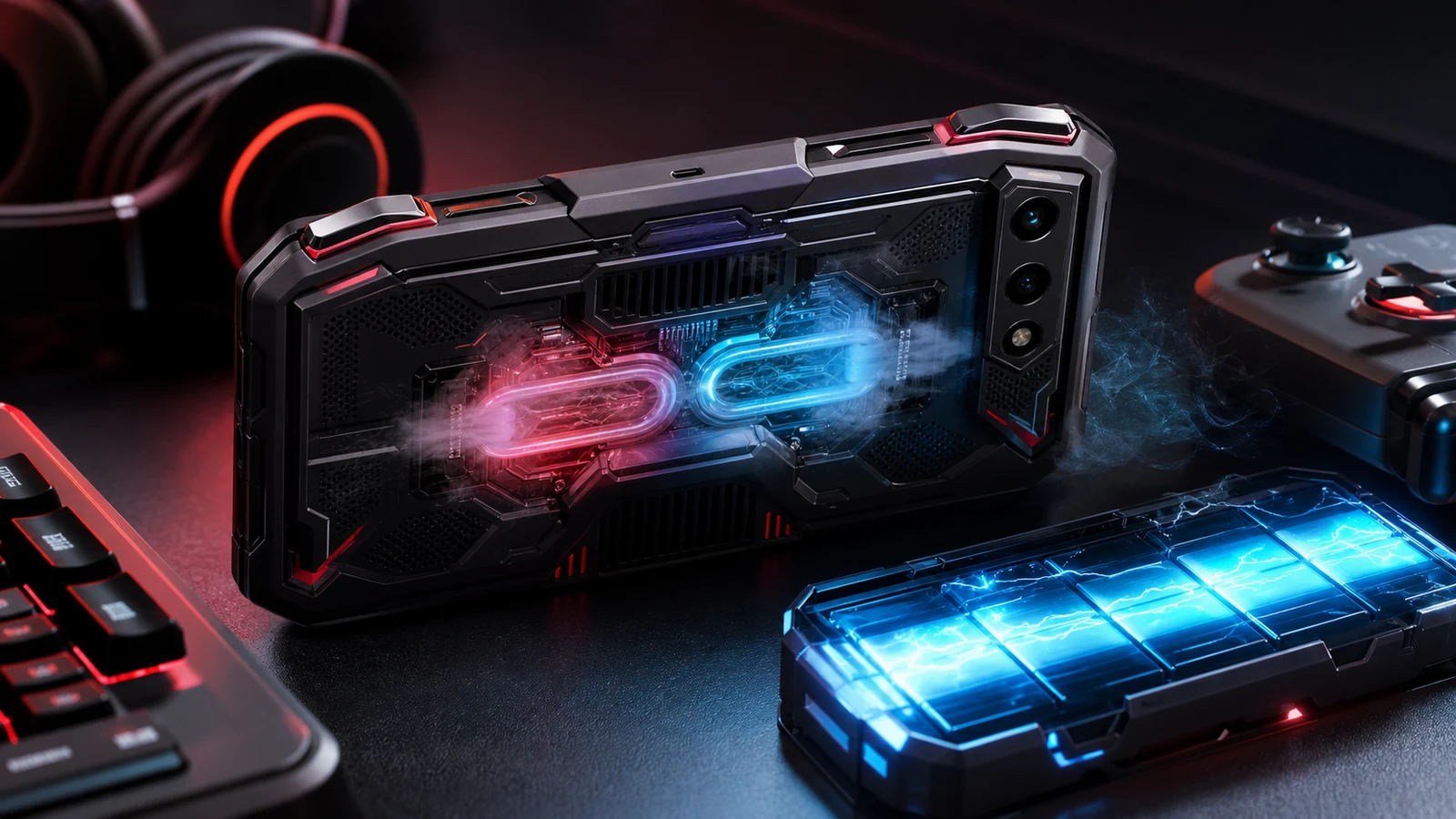
The REDMAGIC 11S Pro is being positioned less like a normal flagship phone and more like a pocket gaming machine. New York Post detailed the launch push, including a Snapdragon 8 Elite Gen 5 Leading Version processor, a RedCore R4 gaming chip, a 144Hz BOE X10 under-display screen, a 7,500mAh battery, 80W charging, a high-speed turbo fan, a large vapor chamber, and shoulder-trigger controls.
Gaming phones have always lived in a narrow space. They need enough phone polish for daily use, but their real pitch is sustained performance. A normal flagship can run games quickly for a while. A dedicated gaming phone tries to keep frame rates stable after heat builds, battery drains, and long sessions expose weak cooling. That is where the REDMAGIC formula still makes sense.
Why the cooling story matters
Mobile chips are fast enough that peak benchmark numbers are no longer the whole conversation. The real test is whether a phone can hold performance without becoming uncomfortable or throttling heavily. REDMAGIC's active cooling approach is unusual compared with mainstream phones, but it matches the target buyer: someone who notices frame pacing, touch latency, thermal buildup, and battery drop during long sessions.
| Gaming feature | What it tries to solve | Who benefits most |
|---|---|---|
| Turbo fan and vapor chamber | Sustained heat during long games. | Players who run demanding titles for hours. |
| 144Hz display | Smoother motion and lower perceived lag. | Competitive mobile gamers. |
| 7,500mAh battery | Short endurance under gaming load. | Travelers and streamers away from a charger. |
| Shoulder triggers | Touchscreen control limits. | First-person shooter and action-game players. |
The battery capacity is especially important. Mobile gaming burns power in several ways at once: display brightness, high refresh rate, GPU load, network activity, audio, and cooling. A 7,500mAh pack gives REDMAGIC a clear advantage over typical slab phones, even if real endurance still depends on game settings and thermal behavior.
The design tradeoff is that gaming phones rarely feel subtle. Transparent panels, lighting, vents, and flat gaming-focused frames can be divisive. That is not a weakness if the buyer wants the phone to look like gaming hardware, but it does limit mainstream appeal. The REDMAGIC 11S Pro is not trying to hide what it is.
Cameras are part of the story, but not the heart of it. A 50MP main camera and supporting sensors are useful because buyers still need one device for normal life. However, gaming-phone buyers are usually more forgiving of camera compromises if the screen, battery, cooling, and controls are strong. REDMAGIC has to be good enough outside games, not necessarily camera-leading.
The software layer will decide whether those parts feel connected. Game-space dashboards, performance profiles, touch-trigger mapping, fan controls, and battery modes can turn strong hardware into a useful tool, but messy software can make the same phone feel noisy and complicated. REDMAGIC needs the interface to help players tune the device quickly without forcing them into constant manual adjustment.
The broader takeaway is that gaming phones are becoming console-adjacent devices. They are still smartphones, but they borrow from handheld PC and console thinking: cooling systems, grips, triggers, big batteries, and display speed. The REDMAGIC 11S Pro shows that this niche is not fading. It is becoming more specialized, and that specialization is exactly what makes it useful.