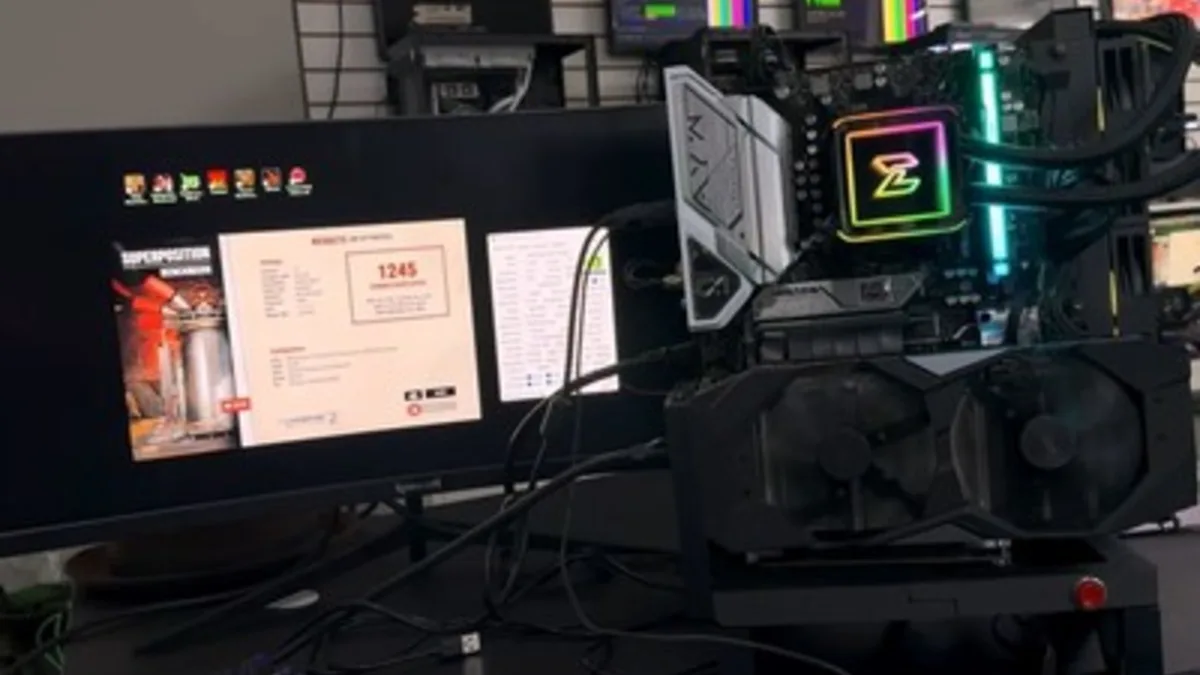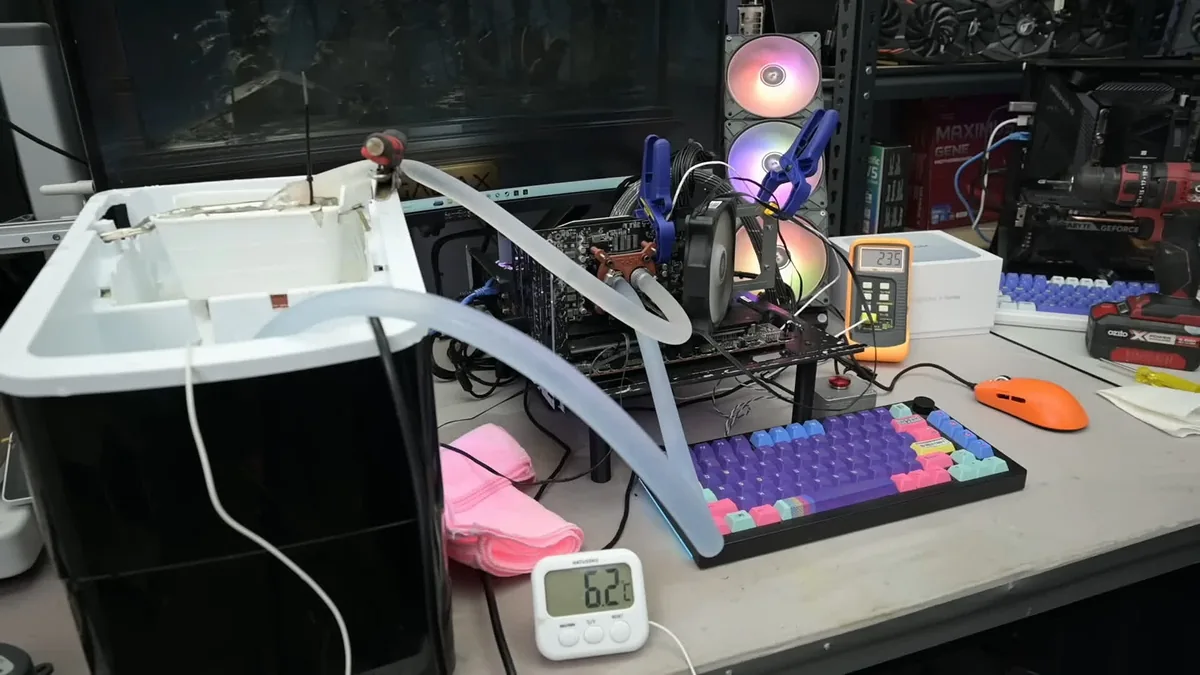
A countertop ice machine cooling an RTX 3060 sounds like a stunt, but it points to a serious truth about modern hardware. Performance is often limited less by what a chip can theoretically do and more by how heat is handled. A graphics card, phone, tablet, or handheld can have impressive silicon, but once temperatures climb, clocks fall and the user feels the compromise immediately.
Extreme PC mods are useful because they make invisible limits visible. Most users will never route a GPU through appliance-grade cooling, and they should not need to. But watching temperatures drop under unusual cooling helps explain why normal coolers, vapor chambers, airflow paths, and fan curves matter. Thermal headroom is performance headroom, especially during long gaming, rendering, or AI workloads.
The same lesson applies beyond desktops. Gaming phones and handhelds increasingly advertise fans, liquid metal, vapor chambers, and external coolers. Our RedMagic cooling design coverage showed how phone makers are turning cooling into a visible selling point. The form factor changes, but the physics does not. A thin device has to move heat away from the chip or accept lower sustained performance.
TechSpot reported on the RTX 3060 ice-machine cooling experiment and the large temperature improvement achieved by the modder. The exact setup is not a consumer recommendation. It is better understood as a demonstration of how aggressively hardware can respond when thermal limits are removed, even from a midrange graphics card that is no longer new.
There are obvious risks. Condensation, electrical safety, pump reliability, leaks, noise, and long-term corrosion can turn an amusing project into damaged hardware. Extreme cooling also does not automatically translate into proportional real-world gains, because voltage limits, silicon quality, drivers, and workload behavior still matter. The experiment is interesting because of what it teaches, not because everyone should copy it.
For ordinary builders, the practical takeaway is simpler. Clean airflow, sensible case layout, fresh thermal paste when needed, and a cooler matched to the workload can extend the useful life of hardware. You do not need a wild mod to benefit from better thermals. You need a system that stays consistent under the tasks you actually run.
The RTX 3060 ice-machine mod is fun because it is excessive, but it also explains why cooling remains one of the most honest parts of gadget design. Chips get faster, devices get thinner, and users expect quieter systems. Heat is the bill that always comes due. Creative experiments like this make that bill impossible to ignore.
The mod also highlights why midrange hardware remains fun for enthusiasts. A flagship card is expensive enough that few people want to risk strange experiments. A familiar RTX 3060 is accessible, well understood, and still powerful enough to show meaningful changes. That makes it a good platform for learning. The point is not that every user needs absurd cooling. It is that experimentation keeps older hardware interesting and teaches lessons that apply to normal builds. It also reminds buyers that good airflow can be an upgrade, not an afterthought.