The RTX 3070 remains a capable GPU in many ways, but memory capacity has become its most visible limitation. Modern games, high-resolution textures, creator workloads and local AI experiments can all collide with 8GB of VRAM faster than owners expected when the card launched. That is why a hardware mod that doubles the memory is more than a neat repair bench trick. It points at a real market frustration.
VRAM pressure is different from raw GPU performance. A card can have enough shader power for a game or workload but still stutter, lower texture quality or fail a task because it runs out of memory. That makes owners feel as if the GPU aged unevenly. The chip still has life, but the memory configuration becomes the wall.
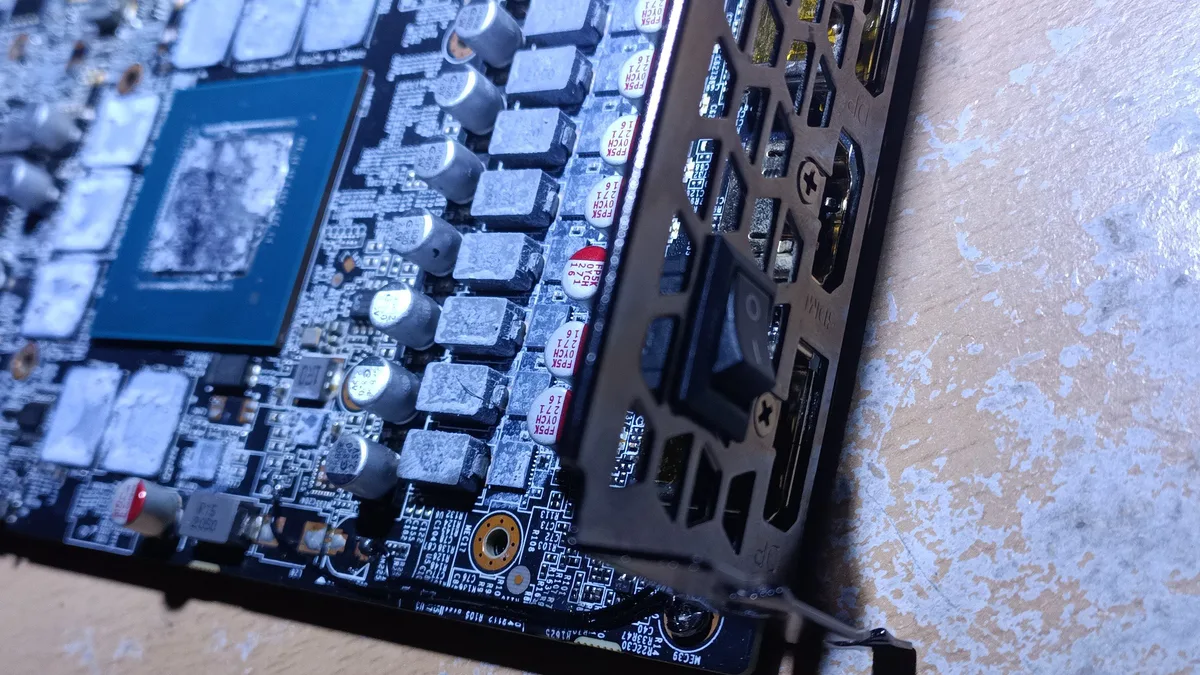
Hackaday covered a project that doubled the VRAM of an RTX 3070. The work is not something ordinary users should attempt casually. It requires board knowledge, component sourcing, soldering skill and firmware awareness. But it is valuable because it shows that the desire for more memory is not theoretical. Enthusiasts are willing to perform serious surgery to get it.
The story pairs well with our earlier coverage of the RTX 50 Super rumor, where memory capacity was again part of the discussion. Nvidia and its partners know buyers are watching VRAM closely. A GPU that looks strong in average frame-rate charts can still be criticized if memory capacity feels too low for the price.
Game developers are also under pressure. Asset quality keeps rising, and PC players expect settings flexibility. Consoles give developers a known memory target, but PC hardware varies widely. When an 8GB card struggles, developers may be blamed for optimization, GPU makers may be blamed for configuration choices, and users are stuck in the middle. More memory is not a cure for every performance issue, but it gives software more room.
Local AI adds another twist. Many users now want GPUs for more than gaming. Image generation, small language models, video tools and creative applications can be constrained by VRAM before compute. That broadens the audience asking for larger memory pools. The same card that once needed to run games now needs to handle experiments that were not mainstream at launch.
Hardware mods like this will remain niche because the risk is high. They are not a consumer upgrade path. But they can influence perception by proving that the bottleneck is real and that the underlying GPU may be more capable than its original memory package suggests. Enthusiast projects often reveal where product planning fell short.
The RTX 3070 VRAM mod is a reminder that memory decisions age loudly. Buyers are learning to look beyond GPU names and benchmark averages. They want capacity that matches the life span of the card. As games, creators and AI tools keep growing, VRAM will remain one of the clearest dividing lines between a GPU that still feels modern and one that feels artificially boxed in.
Reviewers can help by testing more than average frame rates. Texture settings, minimum frame times, creator exports and local AI workloads show memory pressure more clearly than a simple chart. If buyers see those limits before purchase, manufacturers have stronger incentives to stop treating VRAM as an easy place to cut cost.