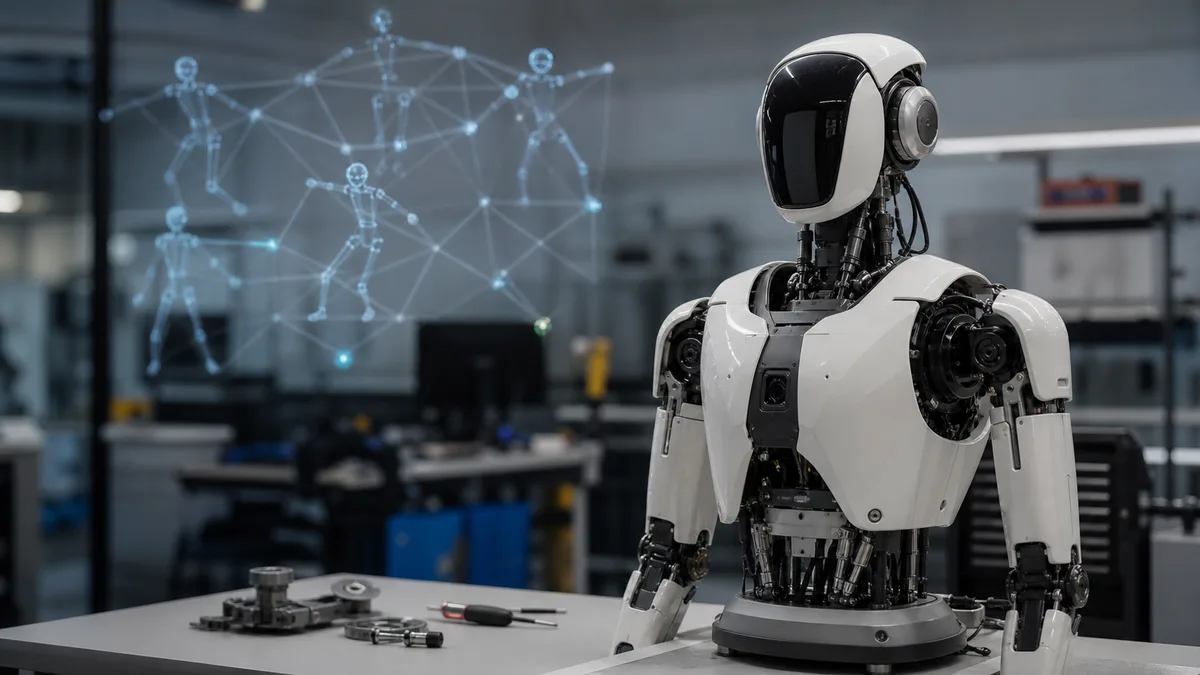
Unitree's reported cooperation with Nvidia and its large research spending plan point to a more serious phase for humanoid robot hardware. The robot market is full of impressive clips, but the harder question is whether companies can build machines that are reliable, affordable, and useful beyond demonstrations. That requires heavy investment in motors, joints, sensors, batteries, software, simulation, and edge computing. The spending phase is unavoidable.
Nvidia's role matters because modern robots are becoming mobile AI computers. A humanoid robot has to process vision, balance, movement planning, object recognition, language instructions, and safety constraints while reacting to a changing environment. That workload is very different from a chatbot. It needs local compute, efficient inference, and software tools that help developers train and test behavior before hardware is damaged in the real world.
Unitree has already built attention with quadruped and humanoid robots that appear more affordable than many Western alternatives. The next challenge is depth. A company can produce viral hardware and still struggle with service, reliability, industrial integration, and developer ecosystems. Cooperation with a major compute platform could help Unitree move from impressive machines to repeatable robot products.
钛媒体 reported that Unitree is working with Nvidia and investing heavily in research, including a 2 billion yuan figure tied to strengthening its capabilities. The report frames this as a push to fill gaps rather than simply celebrate hype, which is the right way to read the robotics market now.
Robots are expensive because every improvement touches the physical world. Better hands require new mechanics and control models. Better walking requires sensors, motors, batteries, and safety testing. Better task performance requires data collection in messy spaces. A software startup can iterate quickly after launch. A robot company has to ship atoms, repair failures, and protect people standing near the machine.
This is why the story connects with Nvidia's broader local AI hardware push. Whether the device is a workstation, a mini AI computer, or a robot, the industry is trying to put more intelligence close to where action happens. For robots, cloud latency and connectivity gaps are not just inconvenient. They can be unsafe.
There is still a risk of overbuilding before demand is clear. Humanoid robots attract funding because they look like a general solution, but many real tasks may be better served by simpler machines. Unitree will need to prove that its hardware can do useful work at a price customers accept. Partnerships and research budgets create potential, not guaranteed product-market fit.
Supply chain discipline will be just as important as model quality. Robot makers need repeatable motors, durable reducers, serviceable batteries, and replacement parts that do not take months to source. A capable robot that sits idle after one broken joint will not survive serious commercial use.
Even so, the direction is important. Humanoid robotics is leaving the pure spectacle phase and entering a capital-intensive engineering phase. Companies that survive will be the ones that combine compute, mechanics, supply chain discipline, and service models. Unitree's Nvidia-linked push suggests the race is becoming less about who can make the most impressive video and more about who can build a robot platform that improves every year.