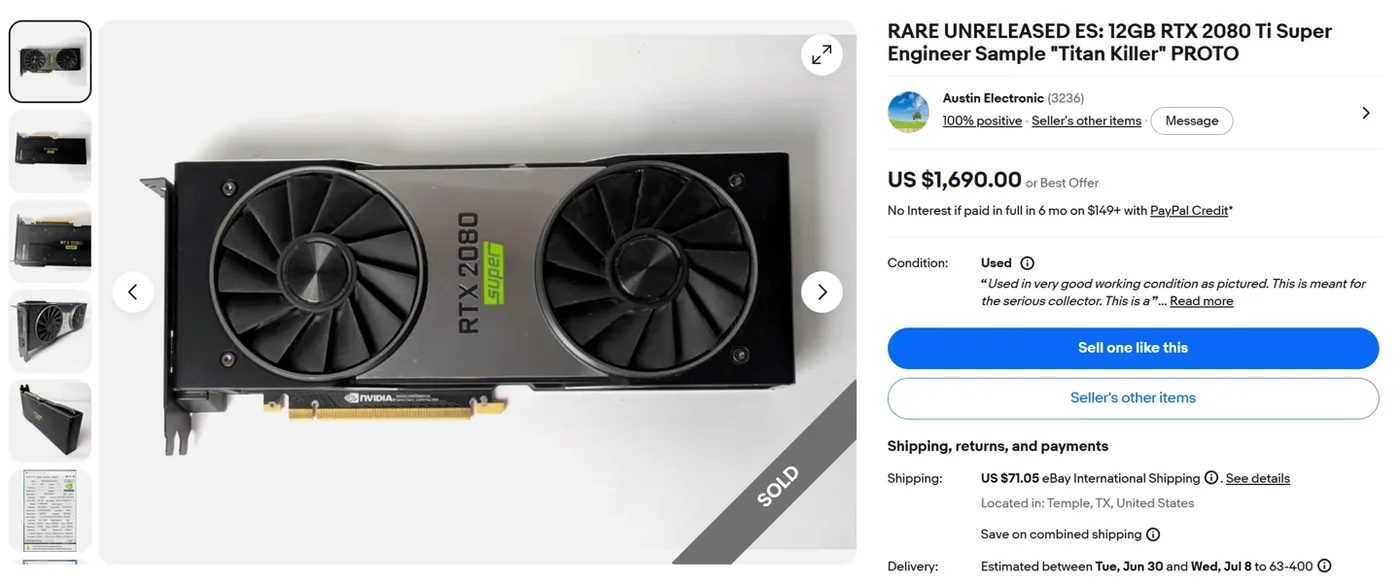
The appearance of an unreleased RTX 2080 Ti Super engineering sample is a reminder that product history is full of almost-launched hardware. Consumers usually see the final lineup and assume it was inevitable. In reality, chip companies test far more configurations than they sell. A prototype like this shows the branch of Nvidia's Turing generation that could have existed if pricing, yields, segmentation, and competitive timing had lined up differently.
The specifications are what make the sample interesting. A full TU102 configuration with 4608 CUDA cores and a 384-bit memory bus would have pushed the card close to Titan RTX territory. The retail RTX 2080 Ti used 4352 CUDA cores and an 11GB, 352-bit memory setup. That gap mattered at the high end, where Nvidia needed to protect the Titan brand while also selling a premium GeForce flagship. A stronger 2080 Ti Super could have made the lineup more exciting, but also more awkward.
That tension still exists in modern GPU strategy. Companies want enough segmentation to charge different customers properly, but enthusiasts dislike artificial limits. The same debate now surrounds memory capacity, AI performance, and workstation-adjacent cards. Our coverage of the RTX 50 Super rumor cycle shows that buyers still watch every small spec change for signs of how Nvidia is protecting or reshaping its stack.
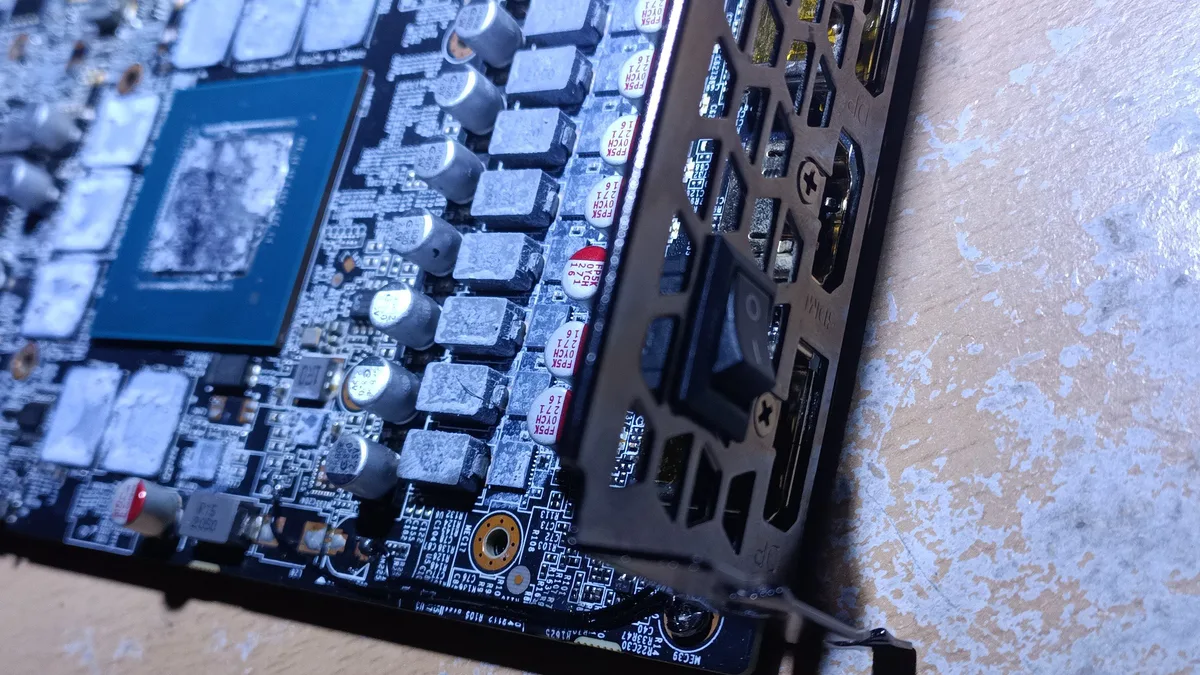
The report from IT Home says VideoCardz spotted the engineering sample on eBay. The card reportedly carries 12GB of GDDR6 memory, a full 384-bit bus, and a cooler design unlike standard RTX 20-series cards. The seller described it as a near-final internal sample that requires Windows test mode and driver INF edits to work properly.
The driver detail is important because it confirms this is not a normal collectible card. Prototype GPUs often have odd device IDs, incomplete support, and fragile compatibility. That makes them fascinating for preservationists and hardware historians, but risky for anyone expecting a daily-use graphics card. The value is less about practical gaming and more about understanding how close Nvidia came to shipping a more aggressive Turing product.
Why it never launched is easy to imagine, even if the final internal reason remains private. A near-Titan GeForce card could have undercut the more expensive Titan RTX, complicated inventory, and narrowed Nvidia's own upgrade ladder. The prototype therefore tells two stories at once: engineers had a more powerful card within reach, and product managers likely had good reasons to keep it off shelves. In that sense, the RTX 2080 Ti Super sample is not just rare hardware. It is evidence of the business decisions hidden behind every GPU generation.
There is also a preservation value here. Prototype GPUs are snapshots of engineering debates that rarely become public. They show what was physically possible, which board designs were tested, and how close a company came to drawing a different product boundary. For collectors, that makes the card more than a benchmark curiosity. It is a piece of PC hardware history, especially because the Turing era marked the first mainstream Nvidia push into ray tracing and AI-assisted graphics features.