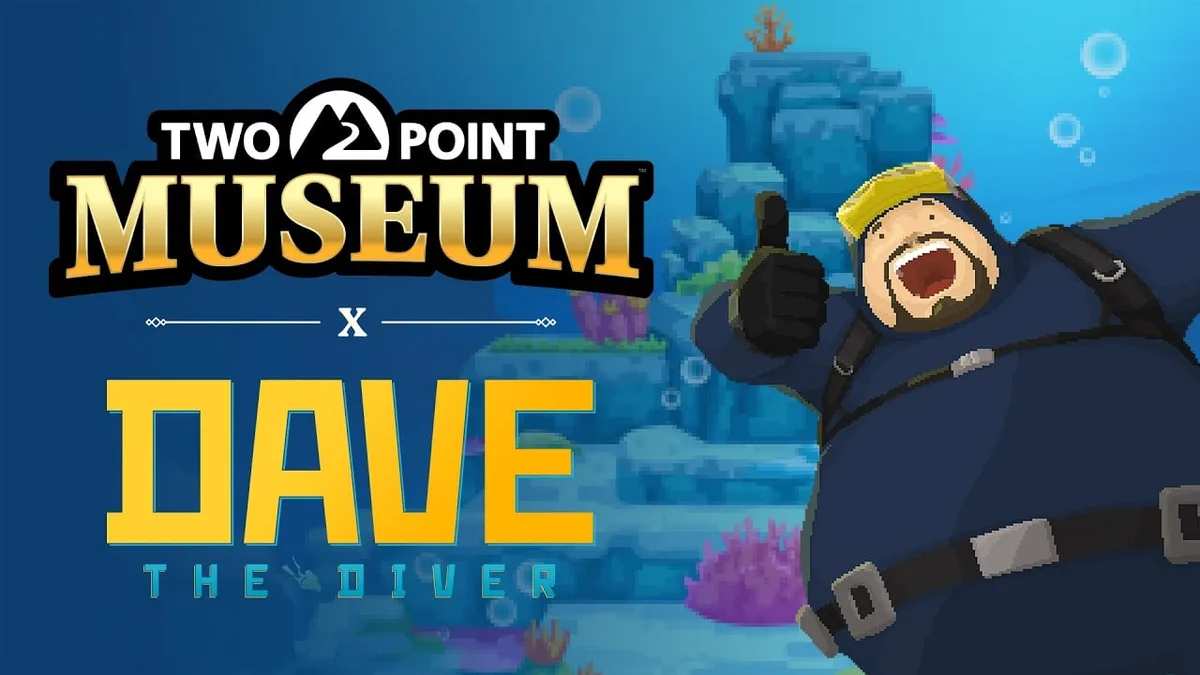
Game crossovers can feel lazy when they only add a costume, a logo, or a short-lived shop item. They work better when the borrowed world changes how players interact with the game. The Two Point Museum and Dave the Diver collaboration has that advantage because both games already care about collecting, curiosity, humor, and turning odd discoveries into systems.
Two Point Museum is built around managing exhibits, visitors, staff, and themed collections. Dave the Diver brings underwater exploration, restaurant rhythm, and a playful sense of discovery. On paper, the two properties fit better than many promotional crossovers because a museum can naturally turn aquatic finds into exhibit material. The collaboration does not have to fight the premise.
The update also arrives at a time when live games need a steady reason for players to return. Not every title can or should become an endless service, but post-launch updates can keep a management game alive if they add new goals without overwhelming the original design. The danger is clutter. The opportunity is giving players a fresh angle on systems they already enjoy.
Gematsu reported that SEGA and Two Point Studios have released the version 10.0 collaboration update. The update matters less as a marketing tie-in and more as an example of how mid-size games can use crossovers to create meaningful reasons to revisit them.
This sits beside the broader launch-year pressure we saw in Switch Sports Resort and motion-control expectations. Players are being asked to care about more updates, more platforms, and more versions. The content has to feel specific enough to justify attention. A crossover that uses the host game's mechanics has a better chance than one that simply adds branding.
For management games, theme compatibility matters. New exhibits, staff challenges, visitor reactions, decorations, and collection goals can all fit into the normal loop. That lets the update feel like an expansion of the simulation instead of a side menu. The best crossover content respects the pacing of the game that receives it.
There is also a discovery benefit. Dave the Diver fans may sample Two Point Museum, while Two Point players may be reminded to try Dave the Diver. That is the business logic. But the player-facing logic must still be stronger than the advertisement. If the update is charming and useful, the marketing takes care of itself.
The collaboration shows that crossovers do not need to be huge to be effective. They need to understand why the two games belong together. When a management sim about exhibits borrows from a game about finding strange things under the sea, the result can feel natural. That is a healthier model for game updates than simply chasing the loudest franchise cameo.
It also gives players a cleaner reason to reinstall or return after drifting away. A good update should not punish people who skipped earlier events. It should welcome them back with something easy to understand and deep enough to play for more than a few minutes. That is where this crossover has room to succeed: as a small, themed refresh that respects the base game.