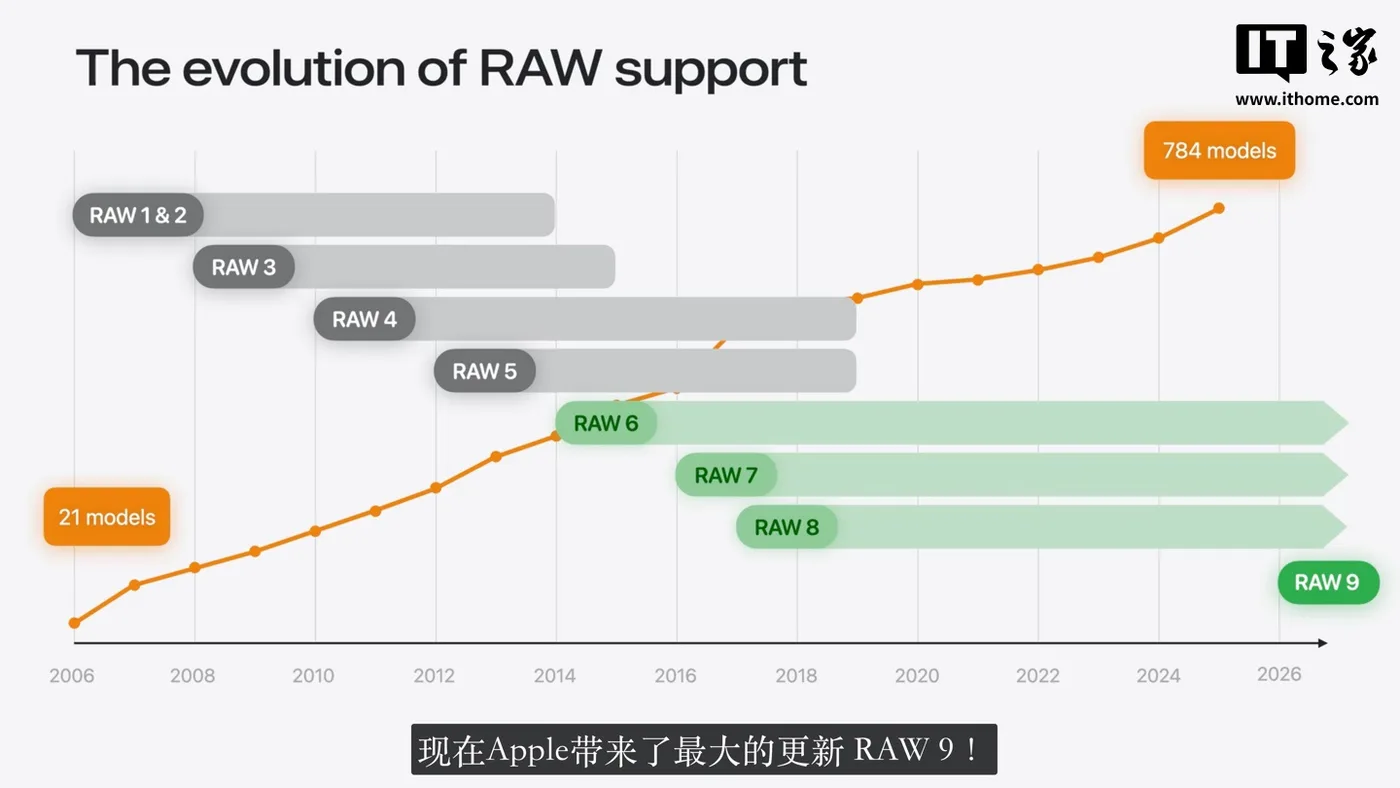
Apple's Core Image RAW 9 update is not the kind of announcement that gets the loudest keynote reaction, but it may matter more to serious photo apps than a new filter, menu, or camera preset. The company has rebuilt a major part of its RAW image pipeline for the first time since RAW 8 arrived in 2017, and the interesting part is where the improvement comes from. Apple is no longer treating early RAW handling as a mostly traditional image-processing step. It is bringing machine learning directly into the demosaicing and noise-reduction stage, where a camera sensor's raw information first becomes a usable image.
That timing matters. RAW editing has always promised more flexibility than compressed camera files, but the first conversion step determines how much useful detail survives. If color edges are interpreted badly, if fine texture is smeared, or if noise reduction is too blunt, the later edit starts from a weaker image. RAW 9 tries to move that foundation forward by combining demosaicing and denoising inside a Core ML model. In plain terms, Apple is using a learned model to make better decisions before the photo even reaches the normal creative controls.
The immediate audience is developers, not casual users. Apple is positioning the new pipeline through APIs that image editors, cataloging apps, and camera utilities can adopt. The company says RAW 9 improves sharpness, color, and detail while taking advantage of Apple Neural Engine performance. That fits a wider pattern we have been watching in Apple's software stack, where AI features are becoming lower-level building blocks instead of only visible assistant features. Our recent coverage of Apple's Mac software direction showed the same kind of platform-level thinking.
The Chinese report from IT Home notes that Apple described RAW 9 as the largest update in the history of Core Image RAW and said the system now supports RAW files from 784 camera models. It also highlights improvements for Fujifilm X-Trans CMOS sensors, where older RAW workflows can struggle with false color and loss of fine detail.
For users, the benefit will depend on adoption. A new Apple pipeline does not automatically improve every workflow overnight. Apps need to use the updated APIs, and professionals will still compare output against Adobe, Capture One, DxO, and camera-maker tools. But Apple has a structural advantage: it controls the silicon, the operating system, and the developer framework. If RAW 9 performs well on Apple Neural Engine hardware, small developers may get access to image quality improvements that would otherwise require a large proprietary imaging team.
The bigger point is that AI image processing is moving away from novelty. This is not about generating a picture from a prompt. It is about interpreting real sensor data more accurately, with fewer artifacts and better local decisions. That may sound technical, but it affects every photographer who opens a difficult file shot in mixed light, high ISO, or fine repeating texture. RAW 9 suggests Apple wants camera software to become another place where its hardware acceleration and ML frameworks quietly shape the creative result.