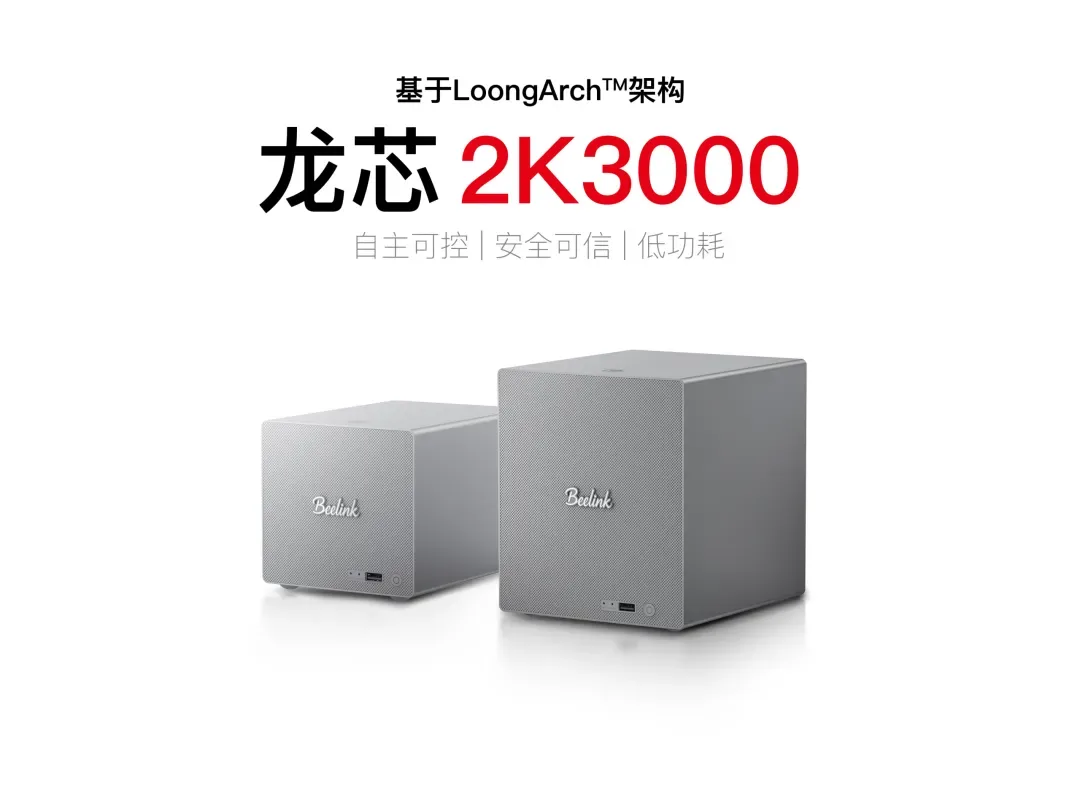
Beelink is widening the definition of a small home server. The companys ME Pro storage-focused mini PC line already covered x86 and Arm platforms, and now it is adding a model based on Loongson 2K3000 silicon. That makes the product more than a routine NAS refresh. It becomes a signal about domestic Chinese processor adoption in everyday storage hardware.
NAS mini PCs are attractive because they sit between a normal desktop, a dedicated network storage box, and a homelab machine. Users want quiet operation, multiple drive bays, reliable networking, low power draw, and enough compute for file sharing, media management, backup, and light services. The processor choice shapes all of that.
Loongson 2K3000 is not being positioned as a gaming chip or high-end workstation processor. The interest is architecture independence and sufficient local compute for storage tasks. If Beelink can make the software stack easy enough, a Loongson NAS box could appeal to buyers who care about domestic silicon, local control, and self-hosted services.
IT Home reported that Beelink is expanding the ME Pro large-storage computer family to three platforms with the new Loongson 2K3000 model. The processor is an eight-core SoC based on Loongsons self-developed architecture, runs up to 2.2GHz, includes an LG200 GPGPU, and offers more than 6 TOPS of AI compute.
The hardware around the chip is practical for a NAS-style mini PC. The Loongson version will offer two-bay and four-bay storage options, onboard 64GB eMMC, a DDR4 memory slot, M.2 PCIe SSD and M.2 SATA SSD expansion, dual USB 3.1, HDMI, dual 2.5GbE networking, Wake-on-LAN, and PXE boot. Pricing has not been announced.
This is adjacent to the home infrastructure trend we have covered in on-prem and local compute discussions. Not every user wants another cloud subscription. Small storage servers let households and small offices keep backups, photos, media, and private services closer to home.
The dual 2.5GbE ports are a practical highlight because storage boxes are increasingly limited by network speed, not just drive speed. Two faster-than-gigabit ports can support link aggregation, separate LAN paths, router use cases, or faster backups from modern laptops and mini PCs. That makes the ME Pro more flexible than a basic two-bay appliance, especially for users experimenting with virtualization, local AI services, or multi-device media libraries.
For home labs, those ports can turn a storage appliance into a more versatile network node.
That extra role could help justify the product even before pricing is confirmed.
The open question is software compatibility. NAS buyers care less about theoretical architecture independence and more about whether Docker-like workloads, media tools, backup clients, file systems, and management dashboards work reliably. Loongson hardware needs a clean software story if it wants to move beyond enthusiasts.
Still, the ME Pro expansion is notable. The mini PC and NAS market has become crowded with similar x86 boxes, so a third architecture gives Beelink a different story. If the device is stable, quiet, and affordable, it could make domestic silicon feel less abstract and more useful inside a product people actually place on a shelf.