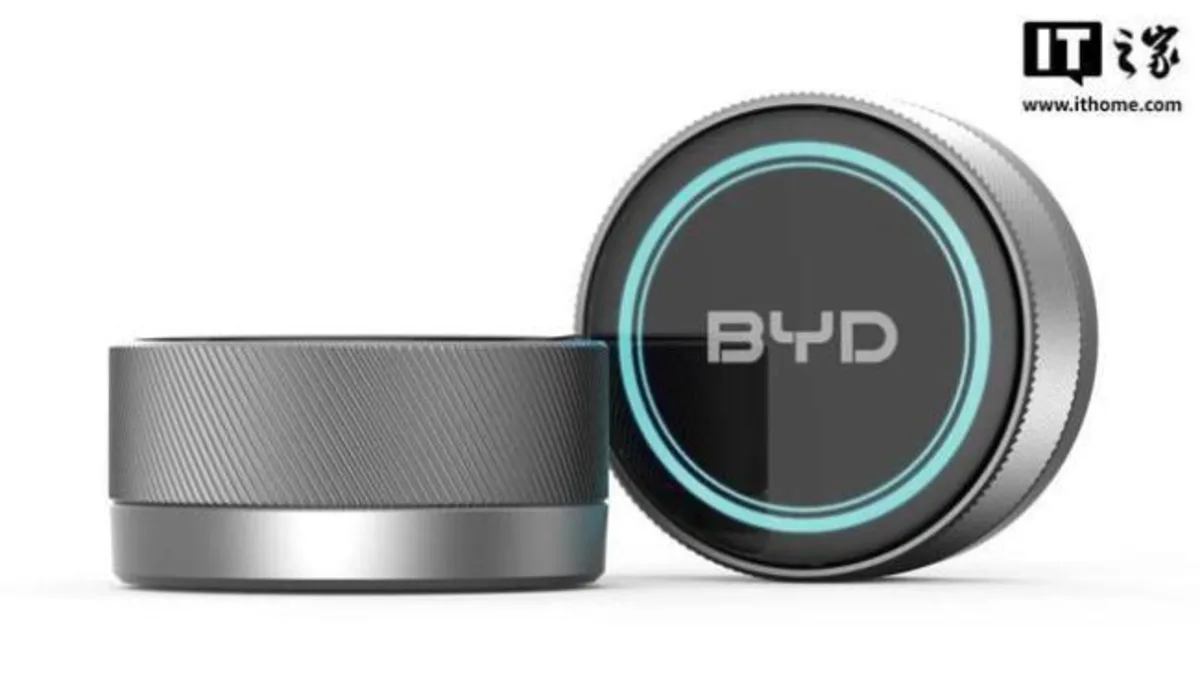
BYD's Lingdong Button is a small accessory, but it says a lot about where smart car interiors are heading. Automakers have spent years moving controls into touchscreens, voice assistants, and app-style menus. That makes cabins cleaner, but it can also make common actions slower. A separate physical shortcut button is a quiet admission that drivers still want tactile control for tasks they repeat every day.
The idea is simple: place a small control in the cabin and let the driver assign it to useful functions. That could mean adjusting climate settings, changing seat behavior, triggering a favorite vehicle mode, or quickly pairing with a phone. The value comes from reducing the need to dig through menus while driving. If done well, a configurable button can make a software-heavy car feel less distracting.
We have seen car companies experiment with automation and convenience in many forms, including Xiaomi's attempt to make charging more automatic with a robot charging arm. BYD's accessory is much smaller, but it aims at the same ownership problem: how to remove daily friction once vehicles become full of software.
China.com reported that BYD's official mall has listed the Lingdong Button at a launch price of 259 yuan, initially for the Datang model. The report says it supports more than 40 customizable shortcut functions, magnetic or adhesive placement, click and rotation interactions, NFC-assisted phone pairing, and up to one year of battery life.
That feature list is practical rather than flashy. The most useful smart-car accessories are often the ones that make repeated actions faster. A driver may use a giant center display for navigation and media, but still prefer a physical shortcut for climate, seat comfort, or a routine cabin setting. The ability to place the control where it feels natural is also important because drivers have different habits.
The main challenge will be reliability. A button that controls car functions must connect quickly and behave predictably. The reported latency of under 30 milliseconds sounds promising, but real-world performance depends on Bluetooth stability, battery health, and software updates. If a shortcut fails often, users will stop trusting it and return to the screen.
BYD's move also hints at a wider accessory market for software-defined vehicles. Once cars expose more functions through software, physical add-ons can become personalized control surfaces. The Lingdong Button may be a modest product, but it captures an important truth: not every future car control belongs on a glass screen.
It will be worth watching whether BYD opens this idea to more models quickly. An accessory like this becomes more compelling when it follows the owner across vehicles or at least works across a brand family. If each model needs a different version, the product feels narrow. If BYD turns it into a small control platform, it could become a useful way to personalize cabins without redesigning dashboards. That is a smart direction for cars that already depend heavily on software.
Small hardware controls also help passengers. Not every cabin interaction should require the driver to operate a screen. A well-placed shortcut can make shared family cars easier for everyone to use.