AI creates a difficult security question: how can a system use sensitive data without exposing it to the wrong people or the wrong layer of infrastructure? Encryption at rest protects stored data. Encryption in transit protects data as it moves across networks. But AI needs to process data while it is running, and that stage is where normal encryption is not enough by itself.
Confidential computing is designed for that missing stage. It helps protect data while it is in use by running workloads inside hardware-protected environments. For AI, that can mean keeping prompts, embeddings, model inputs, business documents, medical records, financial data, source code, or customer context protected while the model or data pipeline works on them.
This does not make AI automatically safe. It does not fix bad access control, weak application design, poor data governance, or careless model output. But it gives cloud teams a stronger way to protect sensitive workloads in shared infrastructure, especially when AI systems need to handle information that the business cannot casually expose. For related foundations, see our guides on cloud security best practices, AI in cloud computing, and data analytics in the cloud.
What Is Confidential Computing?
Confidential computing is a security approach that protects data and code while they are being processed. It normally does this with a hardware-based trusted execution environment, often called a TEE. A TEE creates an isolated runtime where sensitive code and data can run with stronger protection from the surrounding system.
In a normal cloud environment, many layers sit around a workload: hardware, firmware, hypervisor, host operating system, cloud control plane, administrators, monitoring tools, and the guest operating system. Cloud providers build strong isolation across those layers, but highly sensitive workloads may still need a tighter trust boundary. Confidential computing reduces the number of layers that need to be trusted.
The basic idea is simple: put the sensitive workload in a protected environment, encrypt the memory that workload uses, and give the customer a way to verify that the expected code is running in the expected secure environment before secrets or data are released.
Why AI Makes Confidential Computing More Important
AI systems often need rich context. A simple chatbot may only need public information, but enterprise AI usually needs internal documents, source code, contracts, customer records, support history, financial data, or regulated information. The more context the model uses, the more valuable and sensitive the workflow becomes.
This is especially important for retrieval-augmented generation, document analysis, customer support automation, medical summarization, fraud detection, legal review, and multi-party analytics. In these cases, the model is not just answering a generic question. It is using business data that may carry privacy, compliance, or competitive risk.
Confidential computing gives teams a way to build AI workflows where sensitive inputs are protected during processing, and where the environment can be verified before data is shared with it. That matters for internal trust, vendor review, audit evidence, and customer confidence.
How a Trusted Execution Environment Works
A trusted execution environment creates a protected area for code and data. The exact design varies by processor, cloud platform, and service, but the core idea is consistent: isolate the workload from other software layers and protect its memory while it runs.
A TEE can help protect against some risks from the host operating system, hypervisor, cloud administrator access, or neighboring workloads. It also gives the workload a stronger boundary for secrets, keys, and sensitive data. The protected environment is not a replacement for normal cloud security. It is an additional layer for workloads where normal isolation is not enough.
For AI, the TEE may protect an inference service, a data preprocessing job, a vector search workflow, a model evaluation step, or a collaborative analytics application. The value is strongest when sensitive data must be processed in a cloud environment but the business wants a narrower trust boundary.
Attestation: The Proof Before the Data Moves
Attestation is one of the most important parts of confidential computing. It lets a system verify that a workload is running in the expected protected environment, with the expected code or configuration, before releasing secrets or sensitive data.
Without attestation, a company may only have a policy promise: "This workload runs securely." With attestation, the company gets cryptographic evidence that can support a stronger decision. A key management system can use that evidence before releasing a decryption key. A data owner can use it before sharing a dataset. A partner can use it before joining a collaborative AI workflow.
In practical terms, attestation turns confidential computing from a marketing claim into a technical control. It helps answer: is this the right workload, on the right platform, in the right protected state?
Where Confidential Computing Fits in AI Architecture
Confidential computing can protect several parts of an AI system. It does not have to protect everything, and in many cases it should not. The goal is to protect the highest-risk processing steps where sensitive data is exposed in memory.
For example, a public FAQ bot may not need confidential computing. A legal assistant that reads confidential contracts might. A model that summarizes public documentation may not need it. A model that processes medical records, payment disputes, merger documents, or source code may need stronger protection.
| AI workload | What needs protection | How confidential computing helps | Extra controls still needed |
|---|---|---|---|
| Confidential inference | Prompts, user context, retrieved documents, and model inputs. | Processes sensitive requests inside a protected runtime. | Output filtering, access control, audit logs, and prompt governance. |
| Private RAG | Embeddings, document chunks, vector search results, and generated answers. | Protects retrieval and generation steps that touch internal knowledge. | Document permissions, retention rules, and source attribution. |
| Secure model evaluation | Test datasets, benchmark prompts, and proprietary quality labels. | Lets teams test models with sensitive examples more safely. | Sampling controls, redaction, and reviewer access limits. |
| Fine-tuning | Training examples, labels, model updates, and intermediate data. | Reduces exposure during training or adaptation workflows. | Dataset governance, model registry controls, and leakage testing. |
| Multi-party analytics | Partner datasets that must be combined without broad sharing. | Allows agreed code to process protected data from more than one party. | Contracts, output review, data minimization, and attestation policy. |
Confidential Inference
Inference is the moment when an AI model receives input and produces output. In enterprise settings, the input can be very sensitive. It may include a support conversation, an internal policy document, a customer record, a product roadmap, a legal clause, a database result, or a chunk of source code.
Confidential inference aims to protect that processing step. The model service, retrieval step, or inference container runs inside a protected environment. Sensitive prompts and context are decrypted only inside that environment. The output is then returned through normal application controls.
This pattern is useful when a business wants AI functionality but does not want sensitive prompts broadly visible to infrastructure layers, operators, or unnecessary services. It is also useful when the business needs stronger proof for an audit or customer security review.
Private Retrieval-Augmented Generation
Retrieval-augmented generation, often called RAG, connects a model to business documents or data. It can make AI much more useful because the answer is grounded in company knowledge. It also creates a bigger security responsibility because the system must retrieve and process internal information.
Confidential computing can protect parts of the RAG workflow: query rewriting, vector search, document chunk handling, context assembly, and final generation. It can be especially helpful when the retrieved documents are sensitive or when a company is using cloud infrastructure for regulated knowledge bases.
RAG still needs normal permission checks. If a user is not allowed to read a document, the AI system should not retrieve it for that user. Confidential computing protects processing. It does not decide who should have access to the source material.
Secure Data Collaboration
Some of the strongest use cases appear when two or more organizations want to learn from combined data without fully handing their data to each other. This can matter in fraud detection, healthcare research, advertising measurement, financial risk, supply chain analysis, and public sector planning.
In a confidential computing design, the parties agree on the workload, verify the protected environment, and release only the required data into that environment. The output can be limited to approved results, such as aggregate statistics, risk scores, model updates, or validated reports.
This is not only a technical problem. The parties still need legal agreements, data minimization, output controls, and clear rules for what results can leave the environment. Confidential computing helps with the trust boundary, but governance decides whether the collaboration is acceptable.
What Confidential Computing Does Not Solve
Confidential computing is powerful, but it is not a complete security program. The application code inside the protected environment can still make mistakes. A model can still reveal sensitive information in its output if the product design allows it. A user with legitimate access can still misuse information. A bad prompt can still ask for data it should not receive.
There are also technical limits. Some workloads may see performance overhead. Debugging can be harder. Hardware support differs across cloud providers and machine types. Some services support confidential modes more maturely than others. Some threat models, such as side-channel attacks, require careful review and current platform guidance.
The right mindset is practical: use confidential computing where it materially reduces risk, then combine it with identity, encryption, logging, network controls, data governance, and model safety checks.
Confidential Computing Compared With Other Controls
| Control | Protects | Does not protect | Use with AI when |
|---|---|---|---|
| Encryption at rest | Stored files, databases, backups, and disks. | Data while actively processed in memory. | Always. It is a baseline requirement. |
| Encryption in transit | Data moving between users, APIs, services, and networks. | Data once it reaches the processing environment. | Always. AI services should not receive plaintext over weak channels. |
| Access control | Who can use data, systems, and model features. | Data exposure inside an approved runtime. | Every AI feature with user-specific or internal data. |
| Confidential computing | Data and code while processed inside a protected runtime. | Bad application logic, unsafe outputs, and misuse by authorized users. | Sensitive inference, private analytics, regulated data, and high-trust workflows. |
| Data loss prevention | Movement or exposure of sensitive information. | All internal processing risk by itself. | When model prompts, outputs, or logs may contain sensitive data. |
| Model safety controls | Unsafe, incorrect, or policy-breaking outputs. | Infrastructure visibility into data in use. | Every production AI product. |
Key Management Is the Heart of the Design
Confidential computing becomes much stronger when key release is tied to attestation. Instead of giving a workload access to secrets simply because it has the right network address or role, the key manager can require proof that the workload is running in the correct confidential environment.
This is important for AI because sensitive data often moves through several steps. A document may be retrieved, decrypted, embedded, summarized, and combined with a prompt. If each step has broad access to keys, the system becomes harder to defend. If key access is limited to verified protected workloads, the exposure narrows.
Teams should also rotate keys, separate duties, limit who can change attestation policy, and log key release decisions. A confidential environment should not become a black box that nobody can govern.
How to Decide Whether an AI Workload Needs Confidential Computing
Not every AI workload needs this level of protection. The decision should start with data sensitivity, threat model, regulation, business impact, and the architecture of the AI workflow.
| Question | If the answer is yes | Likely action |
|---|---|---|
| Does the workload process regulated or highly sensitive data? | Medical records, payment data, confidential contracts, source code, or identity data are involved. | Evaluate confidential computing and stronger governance. |
| Would exposure damage customers, partners, or the business? | The data has legal, financial, privacy, or competitive value. | Use a narrow trust boundary and stricter output review. |
| Is the workload running in shared cloud infrastructure? | The business wants protection from unnecessary infrastructure-layer access. | Consider confidential VMs, enclaves, or confidential containers. |
| Do partners need proof before sharing data? | Policy language alone is not enough for collaboration. | Use attestation and agreed workload measurements. |
| Can normal controls already reduce the risk enough? | The data is low sensitivity and access is already limited. | Do not add complexity unless there is a clear reason. |
Implementation Plan for Cloud Teams
First 30 days: choose the right use case
- List AI workflows that process sensitive data.
- Classify the data used in prompts, retrieval, training, evaluation, and logs.
- Choose one high-value pilot, such as confidential inference for internal documents.
- Define the threat model in plain language.
- Decide what evidence auditors, customers, or partners would need.
Days 31 to 60: build the protected path
- Select the confidential computing service that fits the workload.
- Package the AI service, retrieval step, or data processing job for the protected runtime.
- Connect attestation to key release.
- Restrict network access and service permissions.
- Set logging rules that protect sensitive prompts and outputs.
Days 61 to 90: prove and operationalize
- Run performance, latency, and cost tests against the standard deployment.
- Document attestation evidence and key release policy.
- Test failure modes, rollback, and incident response.
- Add monitoring for workload health, attestation failures, and unusual access.
- Decide whether to expand to more AI workflows.
Performance, Cost, and FinOps Considerations
Confidential computing can add cost or operational complexity. The protected machine type may be more expensive, the workload may have performance tradeoffs, and the team may need new deployment steps. That does not mean it is too expensive. It means the business should measure the cost against the risk reduction and value of the AI workflow.
For AI workloads, the cost discussion should include GPUs, memory, storage, retrieval systems, model calls, logging, and security tooling. A confidential deployment that reduces risk for a high-value regulated workflow may be worth the premium. A low-risk public content summarizer probably is not.
The same discipline used in AI cost management applies here. Measure cost per useful output, not only total cloud spend. Our guide to FinOps for AI explains how to control AI cloud costs without slowing useful experimentation.
Confidential Computing in Hybrid and Cloud-Native Environments
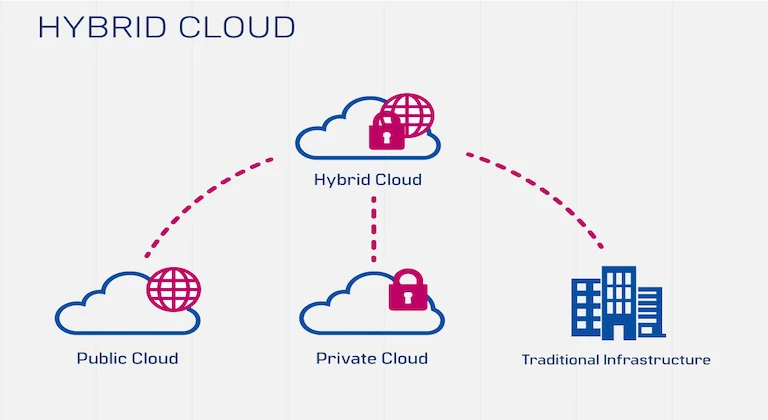
Many companies will not put every sensitive AI workload in the same place. Some data may stay in private infrastructure. Some model services may run in public cloud. Some analytics may happen near the data source. Confidential computing can support this mixed approach by protecting specific processing steps in the places where they run.
This fits naturally with hybrid cloud. A company may keep raw sensitive records in a controlled environment, then run a verified confidential workload for a specific AI analysis. Our guide to hybrid cloud architecture explains why workload placement should be based on control, latency, cost, and compliance.
It also fits cloud-native design when teams use containers, managed services, policy-as-code, and automated deployment. The important point is repeatability. A confidential workload should not depend on manual setup that nobody can reproduce. For the broader development model, see our guide to cloud-native applications.
Common Mistakes to Avoid
- Using confidential computing without a clear threat model. If nobody can explain what risk is being reduced, the design will be hard to justify.
- Skipping attestation. Isolation is useful, but verification is what gives data owners stronger confidence.
- Logging sensitive prompts and outputs. Protected processing loses value if logs expose the same information elsewhere.
- Giving the protected workload broad permissions. Least privilege still matters inside and outside the enclave.
- Ignoring model output risk. Data can still leak through answers if the application design is weak.
- Assuming all AI workloads need it. Use it where sensitivity and risk justify the complexity.
- Forgetting operational recovery. Teams still need backup, rollback, monitoring, and incident response.
FAQ
Is confidential computing the same as encryption?
No. Encryption is part of the picture, but confidential computing focuses on protecting data and code while they are being processed inside a hardware-protected environment.
Does confidential computing make AI private by default?
No. It protects the processing environment, but teams still need access control, data governance, safe logging, output controls, and model safety checks.
What is attestation?
Attestation is a verification process that provides evidence that a workload is running in the expected protected environment with the expected code or configuration.
When should a company use confidential computing for AI?
Use it when AI workloads process sensitive, regulated, proprietary, or partner-owned data and when the business needs a narrower trust boundary or stronger technical proof.
Does confidential computing replace cloud security best practices?
No. It adds protection for data in use, but normal cloud security controls still matter: identity, encryption, network rules, monitoring, key management, backups, and incident response.
Conclusion
Confidential computing helps close one of the hardest gaps in cloud security: protecting data while it is actively being used. That gap matters more as AI systems process richer business context, regulated records, proprietary documents, and partner datasets.
The strongest confidential AI designs combine protected execution, attestation, careful key release, least-privilege access, safe logging, output controls, and clear governance. The technology is not a shortcut around security discipline. It is a powerful additional layer for workloads where data-in-use protection is worth the added design effort.
Used carefully, confidential computing lets cloud teams build AI systems that are both useful and defensible. Sensitive data can support better automation, analytics, and decision-making without being exposed more widely than the business is willing to accept.