Industrial EVs do not have to solve charging the same way passenger cars do. A family car needs public chargers, home charging, road-trip planning, and broad compatibility. A terminal tractor in a freight yard has a narrower job. It runs predictable routes, returns to the same places, and spends its life inside a controlled operating zone. That makes it a strong candidate for charging systems built into the worksite itself.
The latest in-road charging example is interesting because it removes one of the least efficient parts of fleet electrification: stopping to plug in. If a vehicle can receive power while moving through a normal route, the battery can be smaller, uptime can improve, and operators can think about electrification as part of site design rather than as a separate charging chore.
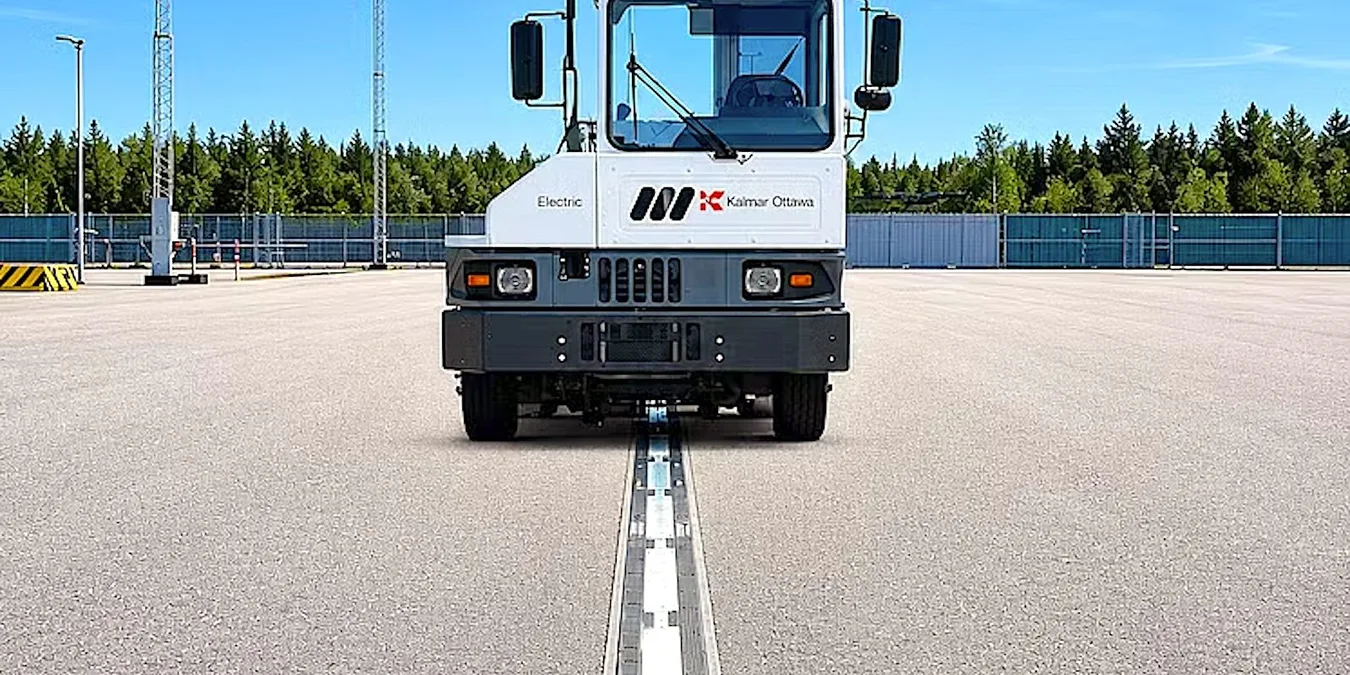
Electrek reported on a Kalmar Ottawa T2 EV electric terminal tractor working with an in-road charging system in Sweden. The visual comparison to oversized slot cars is fun, but the practical point is serious. Heavy electric machines become more compelling when charging fits the workflow instead of interrupting it.
This fits with the broader energy-infrastructure shift we covered in the GM sodium battery and vehicle-to-grid story. EVs are increasingly being treated as parts of energy systems, not just vehicles with plugs. Industrial sites may move even faster because they can control routes, schedules, and power equipment in a way citywide passenger charging networks cannot.
The economic case will depend on installation cost, maintenance, vehicle compatibility, and how much battery capacity operators can avoid buying. Embedded charging is not cheap, and it will not make sense for every depot. But for vehicles that repeat the same path hundreds of times, the math can become more attractive than building a large parking lot full of chargers and waiting for every machine to cycle through.
There are also labor and safety implications. A fleet that charges while moving may reduce cable handling, charger congestion, and the need to schedule around downtime. It could also make electric yard equipment feel more like the diesel equipment it replaces: always available, predictable, and simple for operators. That matters because industrial buyers usually prioritize reliability over novelty.
The passenger EV conversation often focuses on charging anxiety. Industrial EVs may be heading toward a different model: invisible charging inside the work environment. If systems like this prove durable, electrification in ports, warehouses, mines, and freight yards could become less about asking drivers to change habits and more about redesigning the ground beneath the machines.
The technology will also test how well infrastructure vendors and vehicle makers can standardize. A yard operator does not want a charging road that works with only one machine forever. Interoperability, service contracts, repair time, and future vehicle support will matter as much as the charging demonstration itself. The most successful deployments may start small, on routes where the business case is obvious, then expand as operators gain confidence. Industrial electrification rarely moves because of spectacle. It moves when the uptime numbers, maintenance savings, and worker experience are good enough that diesel begins to look old-fashioned.