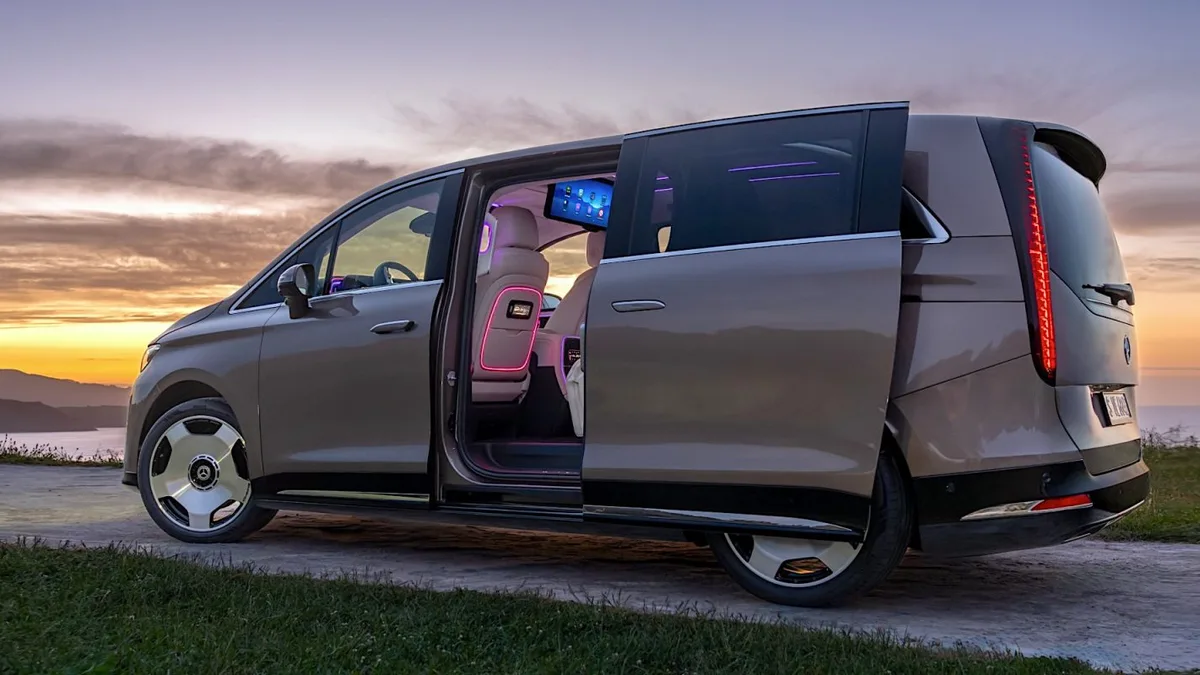
Electric luxury has usually been told through sedans and SUVs. The Mercedes-Benz VLE 300 points to a different opportunity: the premium electric van. That may sound less glamorous, but it makes sense. Chauffeur travel, executive shuttles, hotels, families, and private transport services often care more about space, quietness, screens, legroom, and smooth acceleration than about the shape of a traditional luxury car.
The VLE 300 is interesting because it treats the van body as a feature, not a compromise. A tall cabin gives passengers room to stretch out. A flat electric platform can help packaging. Quiet motors fit the luxury brief. If charging speed and range are strong enough, the format could become a serious alternative to large gas-powered vans and stretched premium SUVs.
That shift matters because EVs are beginning to escape early stereotypes. The first wave proved that electric cars could be quick and high-tech. The next wave has to prove that electric power can improve many vehicle shapes. Vans, pickups, city trucks, off-roaders, delivery vehicles, and people movers all have different needs. Mercedes is using the VLE to show that luxury can move into a boxier, more practical package.
Electrek reported that the Mercedes-Benz VLE 300 combines 400 horsepower, 800V battery technology, high-end infotainment options, room for eight, and limousine-style rear space. Those details make it more than an electrified van. Mercedes appears to be framing it as a private lounge on wheels.
The strategy sits beside Mercedes' broader premium electrification story, including our earlier coverage of the Mercedes S-Class hybrid launch. The company is not making one bet on one powertrain. It is using hybrids, EVs, and luxury packaging to keep buyers inside the brand while regulations and customer expectations keep changing.
The hard test will be range under real passenger loads. A luxury van may carry people, luggage, screens, climate systems, and optional equipment. Highway efficiency can suffer in a tall vehicle. Mercedes will need charging speed, battery size, and route planning to work together so the van feels premium in daily use, not only in a showroom.
There is also a business opportunity. Luxury vans can serve airports, hotels, VIP transport fleets, and corporate campuses where predictable routes make charging easier. Those buyers may value lower noise, smoother driving, and reduced local emissions. They also replace vehicles on planned cycles, which can make electrification decisions more rational than in the private consumer market.
The VLE 300 shows why the EV market should not be judged only by sports sedans and compact crossovers. Electric platforms can make unusual vehicle categories more comfortable and more useful. If Mercedes gets the execution right, the luxury van could become one of the more convincing forms of premium electrification because it uses the strengths of EVs where passengers actually feel them.
The format may also influence rivals. Once buyers experience silent electric space in a chauffeur-style van, a traditional luxury SUV can begin to feel less efficient for passenger comfort. Mercedes is not only selling range and horsepower here. It is testing whether luxury mobility can be defined by room, quiet, and calm technology rather than the familiar sedan silhouette.