Old smartphones usually get passed down, traded in, forgotten in drawers, or recycled for parts. A new Chinese-language report on a Google and UC San Diego project suggests a stranger and more useful second life: turning retired Pixel phones into low-cost compute clusters. It sounds like a lab stunt at first, but the idea reveals how much useful silicon sits idle after the normal upgrade cycle ends.
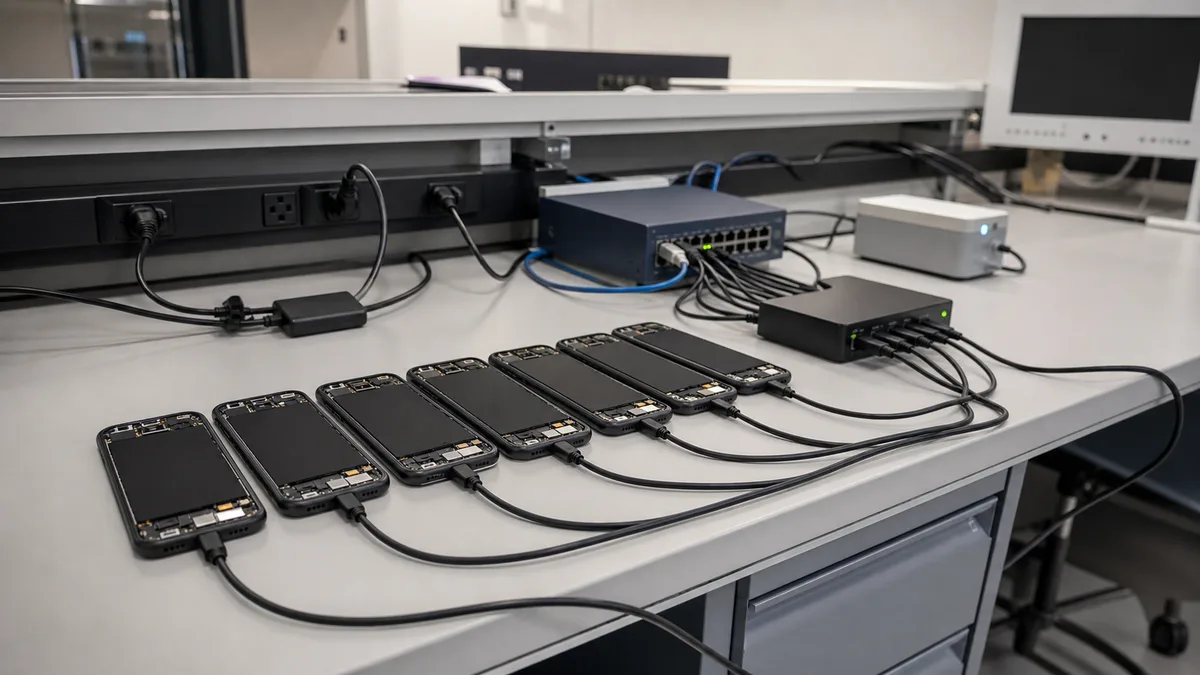
The reported project strips older Pixel phones down to the components that matter for compute, removes nonessential parts such as screens and batteries, installs a more server-like software stack, and arranges the devices into clusters. That turns consumer phone boards into small, efficient nodes. The goal is not to replace serious data-center hardware. It is to test whether low-cost reused devices can support specific education and local computing workloads.
This matters because smartphone chips are remarkably capable. Even older mobile SoCs include efficient CPU cores, accelerators, memory controllers, and networking potential. They were designed to sip power while handling cameras, AI features, games, and multitasking. Once removed from the constraints of a pocket device, those boards can become interesting building blocks. The idea sits beside broader battery and efficiency stories like the large-battery phone leak, because mobile hardware is increasingly about doing more work per watt.
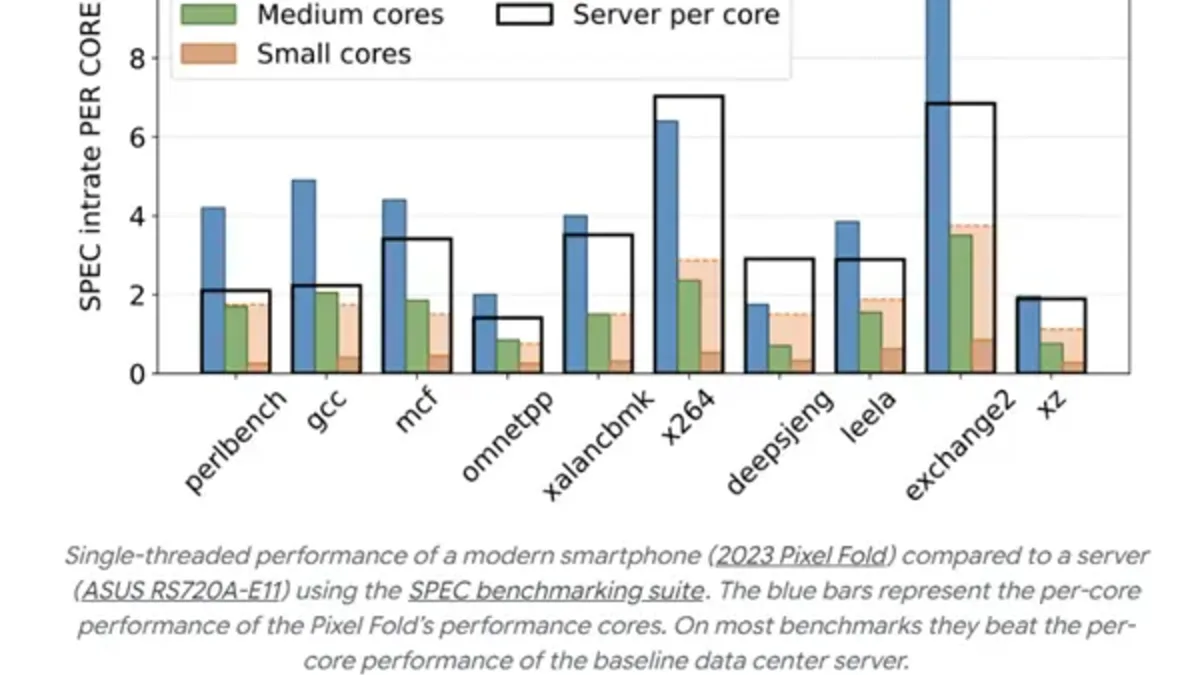
ITBear reported that Google and UCSD found clusters of 25 to 50 retired Pixel phones could match certain aspects of a dual-socket server CPU in specific tests, while a 20-phone cluster could support a classroom-management system for more than 75 students. Those numbers need context, but they make the concept more than a recycling slogan.
The educational angle is the most convincing. Schools and smaller institutions often do not need massive AI clusters. They need affordable local systems for classroom tools, experiments, lightweight services, and teaching infrastructure. A cluster made from reused phones could lower costs, reduce e-waste, and give students a hands-on way to learn distributed computing without renting cloud capacity for every exercise.
There are real limitations. Reliability, cooling, storage endurance, maintenance, networking, software support, and security all become harder when consumer boards are repurposed at scale. A traditional server is built for remote management and continuous operation. A phone board is not. The project becomes practical only if the management layer hides enough of that complexity and if failures are cheap to replace.
The sustainability story is also worth taking seriously. Phone upgrades create huge pools of capable but unwanted hardware. Recycling recovers materials, but reuse can extract more value before the device reaches the end of its life. If even a portion of retired phones can support education, research, monitoring, or local services, the environmental and economic case becomes stronger.
The Pixel cluster project is not a mainstream product yet, and it may never become one in a consumer sense. But it challenges the assumption that old phones are obsolete just because they are no longer fashionable. The next useful server in a classroom may not look like a rack-mounted box. It may look like a row of former pocket computers doing one more job.