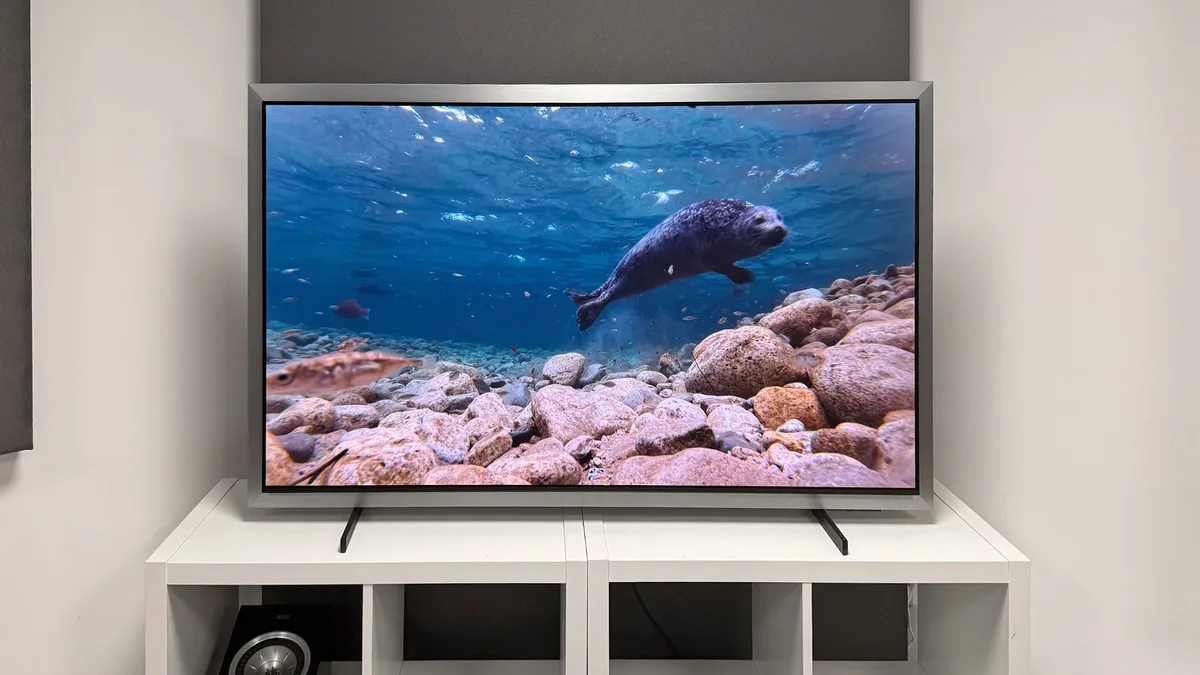
Samsung S99H is the kind of OLED TV that shows how competitive premium home cinema has become. Samsung was once cautious about OLED, but its recent high-end sets have turned the company into one of the category's strongest players. The S99H pushes that position further with a flagship design, gaming-heavy inputs, and a panel strategy that depends on size.
The 55-inch, 65-inch, and 77-inch models use QD-OLED technology, while the 83-inch model uses W-OLED. That distinction matters for buyers who compare performance across sizes, because the largest model may not behave exactly like the smaller versions. The reviewed 55-inch set carries a 4K resolution, Tizen OS, HDR10, HDR10+, HLG support, eARC, optical output, and four full-bandwidth 48Gbps HDMI 2.1 ports.
Gaming support is one of the strongest reasons to pay attention. The S99H supports 4K/165Hz, 4K/120Hz, variable refresh rate, ALLM, and HDR10+ Gaming. That makes it relevant not only for console players but also PC gamers with high-end GPUs. A premium TV that lacks modern gaming support now feels incomplete, and Samsung clearly understands that the living room is also a gaming display space.
What Hi-Fi describes the S99H as Samsung's most mature and refined OLED to date, with the 55-inch model officially priced at 2,499 pounds but already seen at 2,399 pounds. For buyers deciding between a television and projection setup, our XGIMI projector launch coverage explains the tradeoffs on the other side of the big-screen market.
Design With A Purpose
Samsung calls the S99H design FloatLayer. The screen section is mounted on a larger metal backplate with a small gap between the two layers, creating a floating-panel effect. Design language can sometimes feel like marketing filler, but high-end TVs live in visible spaces. A flagship set needs to look considered when it is off, not only impressive when playing HDR content.
The sizing and price ladder also show where Samsung is positioning the TV. Reported pricing places the 65-inch model around 3,199 pounds, the 77-inch around 4,199 pounds, and the 83-inch around 5,999 pounds after early discounts. Those are not casual upgrade prices. The S99H is for buyers who care about picture performance, design, gaming features, and brand ecosystem enough to pay flagship money.
The missing Dolby Vision support remains a familiar Samsung caveat. Samsung continues to back HDR10+ rather than Dolby Vision, which can matter depending on a buyer's streaming habits and disc collection. For some users, the panel quality and brightness handling will matter more than format politics. For others, Dolby Vision absence is still a reason to compare Sony, LG, and Panasonic alternatives.
Audio is another area to judge carefully. Premium TVs often advertise improved sound, but thin panels still have physical limits. eARC support helps because many buyers in this price class will add a soundbar, AVR, or speaker system. The TV's job is to make that connection painless and preserve gaming and HDR features while routing audio correctly.
The S99H does not need to reinvent OLED. It needs to show that Samsung can refine it across picture, design, and input support. Based on the launch details and early review framing, it looks like a serious flagship for people who want one display to handle movies, sport, consoles, and PC gaming without feeling compromised.