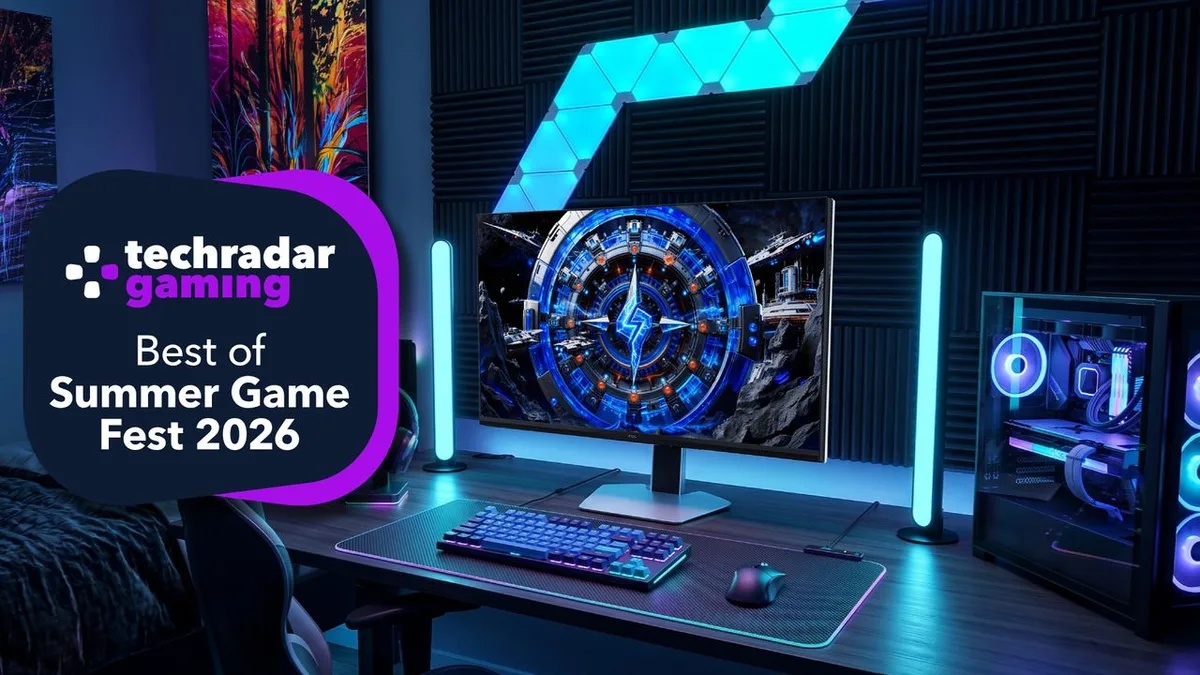
TCL's latest gaming monitor appearance at Summer Game Fest is a reminder that the display race has not settled into one obvious winner. For years, buyers had to choose between resolution and speed. A beautiful 4K panel was ideal for single-player games and content work, while very high refresh rates were reserved for lower resolutions and competitive play. Newer monitors are trying to collapse that choice, and TCL is clearly aiming at players who want one screen to cover both habits.
The appeal of a dual-mode or flexible high-refresh display is easy to understand. A player might want cinematic 4K detail for open-world games, then switch to a faster 1080p mode for shooters or racing titles where response matters more than pixel count. That versatility can be more useful than chasing a single headline number. It also reflects how gaming setups are changing. People stream, edit clips, work, and play on the same desk.
TechRadar went hands-on with the TCL monitor and highlighted the combination of a 4K panel with a high-refresh 1080p mode. That kind of real-world look is useful because monitor specs can be misleading when response behavior, brightness handling, and scaling quality are not considered together.
The monitor also fits the broader PC hardware push we have covered through new gaming hardware demos. GPUs, handhelds, and displays are all being pushed toward more flexible usage. A monitor that can satisfy both visual quality and competitive speed helps reduce the need for separate screens, which matters for people building cleaner desks or smaller gaming rooms.
TCL still has to prove execution. High refresh rates are only useful if motion clarity, input lag, overdrive tuning, and panel uniformity are strong. A monitor can advertise a huge number and still disappoint if transitions smear or HDR looks uneven. Price will also matter. If TCL undercuts established gaming monitor brands while keeping the panel quality high, it could become a serious option for players who previously looked only at ASUS, LG, Samsung, or Alienware.
The bigger story is that gaming displays are becoming less specialized. One panel is expected to be sharp enough for work, fast enough for esports, bright enough for HDR, and accurate enough for media. That is a demanding mix, but TCL's new flagship points in the right direction. The refresh rate race is not just about bigger numbers anymore; it is about making those numbers useful in more than one kind of game.
Console users may also watch this space even if the headline 320Hz mode is aimed at PC players. Modern consoles have made 120Hz common enough that buyers understand refresh rate, while PC gaming keeps pushing what premium panels can do. A monitor that handles multiple modes gracefully can stay useful across console upgrades, gaming PCs, and work laptops. That flexibility matters because displays usually outlive the systems connected to them. TCL has an opportunity to sell the monitor as a long-term desk anchor rather than a single-purpose esports panel. The company will need to be clear about HDMI behavior, variable refresh support, color modes, and how the panel scales lower resolutions. Gamers have learned to read the fine print, and the best monitor will be the one whose real behavior matches its spec-sheet promise.